Recipes as Resistance: The Asian-American Writers Refusing to Let Their Grandmothers' Kitchens Be Forgotten
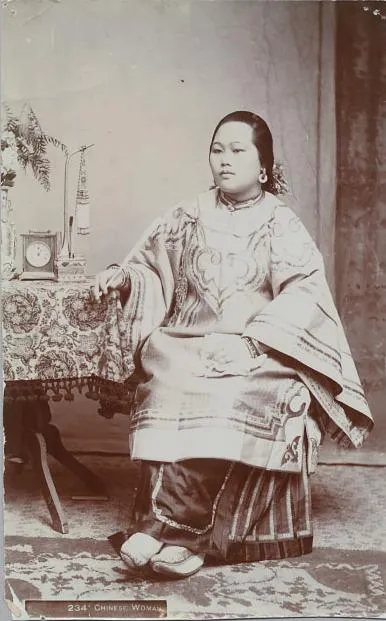
Photo: Unknown, Public domain, via Wikimedia Commons
There's a particular kind of grief that hits second-generation immigrants when they realize they never learned how to make a dish their parent made every Sunday. No written recipe exists. The measurements were "enough" and "until it smells right" and "you'll know." The knowledge lived in someone's hands, and now it's just... gone, or dangerously close to it.
For a growing movement of Asian-American food writers, bloggers, and cookbook authors, that grief has become fuel.
Writing Back Against Erasure
The last several years have seen an extraordinary surge in Asian-American food voices claiming space in American culinary publishing. Cookbooks like Vietnamese Food Any Day by Andrea Nguyen, The Woks of Life series from the Leung family, and My Korean Deli have done more than sell well — they've signaled a cultural shift in who gets to be the authority on Asian food in America.
For too long, that authority defaulted to outsiders. Western food writers "discovering" pho. Glossy magazine features on "exotic" ingredients that Vietnamese grandmothers had been buying at the same grocery store for forty years. Fusion restaurants run by non-Asian chefs getting the James Beard nominations while the immigrant-owned originals went unrecognized down the street.
What's different now isn't just the demographics of who's writing — it's the intention behind the writing. These aren't translations for a Western palate. They're love letters written in the language of food.
The Blog-to-Book Pipeline
Many of today's most influential Asian-American food voices built their platforms the slow way: recipe by recipe, story by story, on blogs and Instagram accounts and YouTube channels that started as personal projects and became communities.
Lily Chen, a third-generation Chinese-American food blogger based in the San Francisco Bay Area, started her site as a way to document the dishes her Shanghainese grandmother made before dementia began to take her memory. "I would sit with her on weekends and we'd cook together, and I'd take notes on everything," Lily told us. "She'd laugh at me for writing down 'a handful of ginger.' But I knew that if I didn't write it down, I'd lose it."
Her blog, which now reaches over 200,000 monthly readers, doesn't just offer recipes. It offers context — the history of a dish, why a particular technique matters, what the meal meant to the family on a specific holiday. That layering of narrative and instruction is something Lily says she consciously chose as a counterpoint to the way Chinese food is often presented in mainstream American media.
"You'd see Chinese food written about as if it appeared from nowhere, as if it doesn't have regions and histories and arguments about the right way to make something," she said. "My blog is me arguing, lovingly, for my grandmother's version."
Monetizing Memory — and Why That Matters
There's sometimes discomfort in the diaspora community around the idea of monetizing cultural heritage — of turning grandma's recipes into a revenue stream. It's a tension worth sitting with. But food writers in this space tend to reframe it: if someone is going to profit from Asian food stories, shouldn't it be the people who lived them?
The economics are real. A successful food blog can generate income through advertising, brand partnerships, and cookbook deals. A cookbook advance — even a modest one — can represent significant financial stability for a first-generation or second-generation family that built its American life on sacrifice and instability. When Hetty Lui McKinnon, a Chinese-Australian food writer, landed her cookbook deals with American publishers, it wasn't just a personal win. It was proof that Asian food stories had commercial value on their own terms, without being filtered through a Western interpreter.
For communities that have long seen their cuisines reduced to cheap takeout stereotypes or "trendy" appropriations, that economic recognition carries weight that goes beyond the dollar amount.
The Difference Between Authentic and Gatekept
One nuance that comes up constantly in conversations with Asian-American food writers is the distinction between authenticity and gatekeeping. Nobody in this movement is arguing that food shouldn't evolve, or that only people of a specific heritage can cook a specific dish. What they're pushing back against is the erasure of origin — the tendency for a dish to gain prestige only once it's been repackaged by someone outside the culture.
Korean fried chicken is a perfect case study. It existed in Korean-American communities for decades before it became a mainstream American food moment. The restaurants that perfected it didn't suddenly get better when food critics started paying attention — the critics just started paying attention. Asian-American food writers are, in part, doing the work of making that attention happen on their own terms, before the mainstream arrives to take credit.
Mike Tran, a Vietnamese-American food writer and cooking instructor in New Orleans, frames it this way: "I'm not trying to protect Vietnamese food from other people. I'm trying to make sure Vietnamese people are centered in the conversation about Vietnamese food. There's a big difference."
What Gets Saved When We Write It Down
At its heart, this movement is about preservation. Not the museum-glass kind — not freezing food traditions in amber and calling them sacred — but the living, breathing, argued-about-at-the-dinner-table kind of preservation that keeps a culture vital.
When Lily Chen publishes her grandmother's red-braised pork recipe with a 500-word essay about New Year's Eve in a Shanghainese apartment building, she's doing something that no amount of fusion restaurant menus can replicate. She's placing a human being — a specific woman with specific hands and a specific laugh — at the center of a culinary tradition.
At Cổ Kính Ánh Hồng, this is the work we find most profound: the act of remembering, carefully and publicly, so that the next generation has something to inherit. Not just a recipe, but a story. Not just a technique, but a relationship.
Because food was never just food. It was always the way we said I love you in languages our children might not fully speak, and I'm still here in countries that didn't always want us.
Write it down. All of it. Every handful of ginger, every "until it smells right," every Sunday morning that smelled like something irreplaceable.
Write it down before it's gone.