Hands That Remember: The Young Asian Americans Sitting Down With Elders to Learn What Screens Can't Teach
Sophia Tran had watched the YouTube video seventeen times. She'd paused it, rewound it, watched it again at half speed. And still, her bánh cuốn came out wrong — too thick, tearing at the edges, nothing like the translucent, silk-thin rice rolls her grandmother used to make in their San Jose kitchen.
"I finally just called my aunt in Vietnam over video chat," Sophia, 23, recalls. "And even she said, 'I can't show you this through a screen. You have to feel it.'"
So Sophia booked a flight. She spent three weeks learning from her aunt in person. She came back with calluses on her palms and a skill she describes as "something that lives in my body now, not my phone."
Sophia is part of a movement that doesn't have an official name but is very much real: young Asian Americans seeking out in-person instruction in traditional crafts, cooking techniques, and cultural practices from elders — family members, community masters, cultural organizations — who hold knowledge that no algorithm has managed to fully capture.
Why the Screen Isn't Enough
We live in a moment when virtually any skill can be Googled, TikTok'd, or streamed. And yet something is clearly missing. Digital fatigue is real, and for many young Asian Americans, the hunger for in-person, tactile learning is inseparable from a deeper need: connection to lineage.
"There's a difference between learning a skill and receiving a skill," says Dr. Mei-Ling Park, a cultural anthropologist at UC Berkeley who studies intergenerational knowledge transmission in diaspora communities. "When you learn in person from an elder, you're not just getting information. You're getting context, story, relationship. That's what gets lost in a video."
This distinction matters enormously in cultures where knowledge was never meant to be codified in text or recorded on a device. The feel of dough at the right elasticity. The sound a wok makes when oil hits it at the correct temperature. The particular tension in thread when a loom is set up properly. These are embodied knowledges — things that live in hands and muscle memory, passed through demonstration and proximity.
The Elders Who Are Ready to Teach
What surprises many young people who take this leap is how ready their elders are to share.
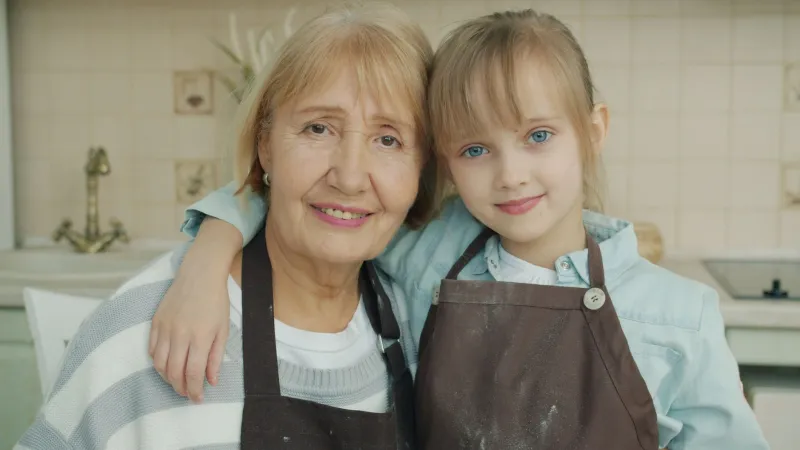
James Yoo, 25, grew up in a Korean-American household in Atlanta where his halmeoni's kimchi-making process was something that happened in the background — something he was vaguely aware of but never thought to ask about. Last winter, he asked.
"She lit up," he says. "She'd been waiting. She had this whole system — the ratios, the timing, which cabbages to pick, how to taste it at different stages. She'd never written any of it down because she assumed no one wanted to know."
They spent three weekends together. James now makes kimchi quarterly and has started documenting his grandmother's recipes in a private family archive he's building with his cousins.
This dynamic — elders waiting to be asked, younger generations finally asking — is playing out in living rooms, community kitchens, and cultural centers across the country. Organizations like the Japanese American Cultural and Community Center in Los Angeles and the Chinese Cultural Center of San Francisco have seen increased interest in traditional craft workshops, with younger participants often specifically requesting instruction from older community members rather than peers.
More Than Nostalgia
It would be easy to frame this trend as a nostalgia play — a response to pandemic-era disconnection or a Gen Z aesthetic preference for "authenticity." And sure, some of that is in the mix. But the young people driving this movement are clear that something more urgent is at stake.
"My grandparents aren't going to be here forever," says Anh Le, 22, who has been learning traditional Vietnamese embroidery from her grandmother in Orange County. "And when they go, if I haven't learned this, it's gone. Not just from my family — from the world. That's not nostalgia. That's preservation."
This awareness of cultural mortality — the recognition that certain practices exist only in the bodies of a shrinking number of elders — is a genuine motivator. It gives these learning sessions a weight and tenderness that a YouTube tutorial simply doesn't carry.
When the Skill Becomes a Bridge
For many young people, the learning itself turns out to be secondary to what happens around it.
Sophia came back from Vietnam with more than a technique. She came back with stories — about her aunt's childhood, about the neighborhood her mother grew up in, about the political history that shaped her family's migration. The bánh cuốn was a door. Once she walked through it, an entire world opened up.
"My aunt told me things she'd never told my mom," Sophia says. "Because we were doing something together. Our hands were busy and the words just came."
This is the quiet magic of intergenerational skill-sharing: it creates a context for intimacy that direct conversation sometimes can't. The task gives everyone something to focus on, and in that shared focus, the real transmission happens.
How to Start
If you're feeling the pull, the entry point is simpler than you think. Ask. Show up. Bring snacks.
Most elders don't need a formal request or a scheduled lesson plan. They need to know you're genuinely interested. James says his grandmother's first question was, "Do you actually want to learn, or do you just want to taste?" He laughed and said both. That was the right answer.
Local cultural centers, community associations, and even diaspora-focused social media groups are increasingly connecting young learners with elder teachers. Some cities have formal programs; others are more informal. But the through line is the same: show up in person, put your phone away, and let your hands start remembering what your ancestors always knew.