Audience Uprising: How Asian-American Viewers Became the Force Hollywood Can't Afford to Ignore
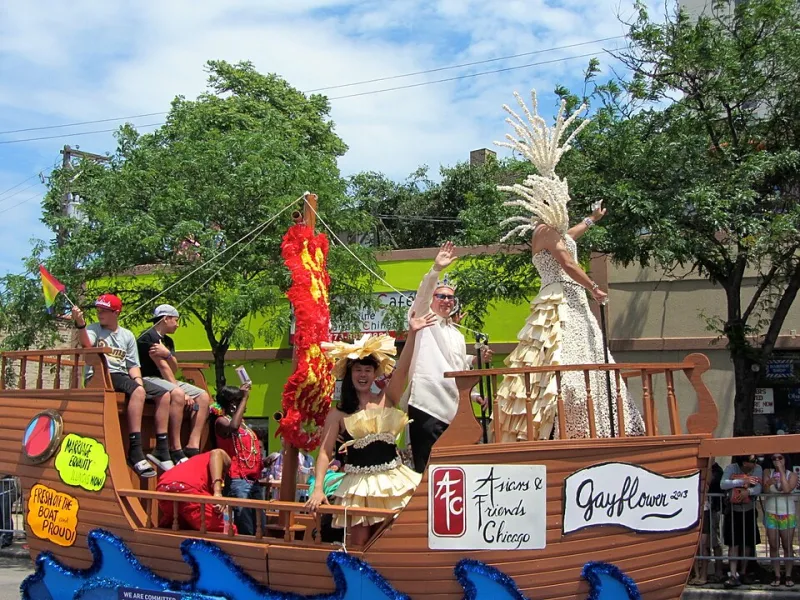
Photo: puroticorico, CC BY-SA 2.0, via Wikimedia Commons
For most of Hollywood's history, Asian-American audiences were treated like a footnote. Studios made films. Audiences watched. If the representation was bad—and it usually was—the options were to complain quietly or simply look away. The power dynamic felt fixed.
It isn't anymore.
Something cracked open in recent years, and what came through wasn't just frustration—it was strategy. Asian-American audiences figured out that their collective voice, amplified by social media and backed by real box office data, could move the needle in an industry that speaks primarily one language: money.
The Numbers That Changed the Conversation
The inflection point most people point to is Crazy Rich Asians in 2018. That film wasn't just a romantic comedy—it was a proof of concept. It showed studios that an all-Asian cast in a mainstream Hollywood production could open to $26 million domestically, outperform expectations, and generate the kind of cultural buzz that money can't manufacture.
But the significance ran deeper than box office receipts. The campaign around that film was a masterclass in community mobilization. Asian-American audiences organized group ticket purchases. They showed up in traditional dress. They wrote essays and op-eds and Twitter threads explaining exactly what it meant to see themselves reflected on a major studio screen for the first time in 25 years. The film became an event—a collective act of cultural reclamation—before it was ever a movie.
That playbook has been refined and deployed repeatedly since. Shang-Chi and the Legend of the Ten Rings. Everything Everywhere All at Once. Past Lives. Each film arrived with its own wave of organized enthusiasm, with diaspora communities treating opening weekend attendance as a form of civic participation. You weren't just watching a movie. You were casting a vote.
Social Media as the New Studio Notes
Here's what's genuinely new about this moment: Asian-American audiences don't just react to Hollywood anymore. They intervene before the product even ships.
When casting decisions land wrong, Twitter and TikTok light up within hours. When a trailer drops and something feels off—a stereotyped accent, a flattened character, a white lead in a story that should belong to someone else—the feedback is immediate, specific, and loud enough to reach the people making decisions. Studios have learned, sometimes painfully, that the cost of ignoring these communities during development is higher than the cost of listening early.
This isn't just cancel culture or outrage cycles. At its best, it's a form of quality control that the industry didn't know it needed. Asian-American critics, cultural commentators, and everyday fans bring a depth of context that most Hollywood development rooms have historically lacked. When they flag something as reductive or inaccurate, they're often right—and the final product is frequently better for having been challenged.
The flip side is that when something lands right, the response is equally powerful. A scene that captures the specific ache of immigrant family dynamics, or a character who gets to be complicated and human rather than decorative, generates the kind of organic word-of-mouth that no marketing budget can buy. Diaspora communities share these moments like gifts—because that's what they are.
Behind the Screen: The Quiet Revolution in the Writers' Room
What's happening in front of the camera is only part of the story. The more durable change is happening behind it.
Asian-American writers, directors, and producers are entering the industry in greater numbers and, crucially, are being given more creative authority than previous generations. Shows like Never Have I Ever, The Sympathizer, and American Born Chinese weren't just diverse in their casting—they were shaped by Asian-American creative voices at the structural level. The difference shows.
These creators are telling stories that resist the old reductive patterns. Characters aren't defined by their ethnicity as a quirk or a problem to be overcome. They're full people navigating full lives, and their cultural backgrounds are woven into who they are rather than stapled on as flavor. That's not a small thing. That's a fundamental shift in how stories get constructed.
It's also creating a pipeline effect. Younger Asian-American writers and directors are seeing people who look like them making things that matter, and they're entering the industry with both ambition and a clearer sense of what they're there to do. The change is slow, but it's structural in a way that previous cycles of diversity interest never quite managed to be.
What Still Needs to Change
Let's not get too comfortable with the wins, though. Progress in Hollywood has a long history of stalling just when it starts to feel real.
Southeast Asian communities remain dramatically underrepresented, both on screen and in the industry's creative infrastructure. South Asian characters are still too often flattened into tech stereotypes or accent-based comic relief. The progress that's been made has skewed heavily toward East Asian stories and faces, which is meaningful—but it's not the whole picture.
There's also a persistent gap between diversity in front of the camera and genuine equity behind it. Hiring an Asian-American lead while keeping the writing staff, director's chair, and production team predominantly white produces a different result than actually centering Asian-American creative authority throughout the process. Audiences are getting better at noticing the difference, and they're talking about it.
And then there's the question of which Asian-American stories get greenlit. Studios are more willing than they were five years ago, but they're still more comfortable with certain kinds of stories—the immigrant success narrative, the cultural identity drama, the action hero who gets to be cool but not too complicated. The full range of Asian-American experience, including its working-class stories, its queer stories, its stories of failure and ambivalence and rage, is still waiting for its turn.
Tastemakers, Not Just Ticket-Buyers
What's perhaps most significant about this moment is the shift in identity. Asian-American audiences are no longer positioning themselves as a community asking for inclusion. They're positioning themselves as tastemakers—people whose aesthetic sensibilities, cultural knowledge, and critical engagement make the art better.
That's a different kind of power. And it's the kind that's harder to take away.
At Cổ Kính Ánh Hồng, we've always understood that culture isn't just something that happens to communities—it's something communities actively shape. The Asian-American audiences showing up for these films, writing these essays, organizing these campaigns, and filling these writers' rooms aren't just consumers. They're co-creators of a cultural moment. And the stories being told because of their presence are richer, stranger, and more honest than anything Hollywood was producing when it thought it could afford to ignore them.