Between the Algorithm and the Altar: How Gen Z Asian-Americans Are Finding Their Own Spiritual Path
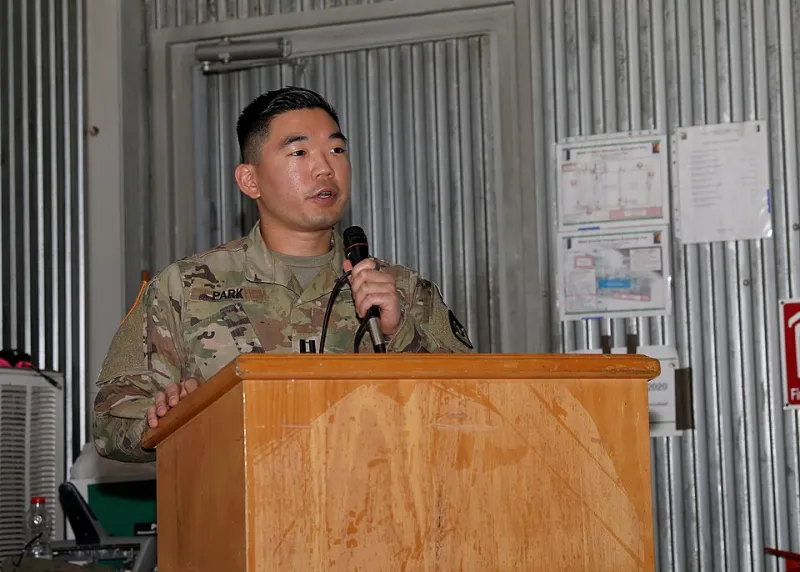
Photo: U.S. Army photo by Sgt. 1st Class Warren Wright, Public domain, via Wikimedia Commons
The incense was her mom's idea, but the TikTok was all Kayla's.
Kayla Chen, 23, grew up in a Taiwanese-American household in the Houston suburbs where Buddhism was background noise — a calendar on the wall, a small altar in the corner, the smell of incense on certain holidays. Her parents practiced quietly, privately, without much explanation. Kayla mostly ignored it. Then, during the pandemic, she found herself down a rabbit hole of videos about Taoist philosophy, ancestor veneration, and the Five Elements, and something clicked.
"I started actually asking my mom questions," she says. "Like, who are the people on the altar? What are we doing and why? And she was shocked. She'd kind of given up on me ever caring."
Kayla is part of a broader wave. Across the country, young Asian-Americans are turning — or returning — to spiritual traditions that their immigrant parents either practiced quietly or quietly set aside. Buddhism, Taoism, Shinto, ancestor veneration, folk religion, shamanic practices from Korea and the Philippines: all of it is experiencing a kind of Gen Z renaissance, shaped equally by family memory and the relentless scroll of social media.
The Unlikely Gateway: Your For You Page
It might seem counterintuitive that TikTok is bringing people to the temple. But for a generation that grew up digitally native and spiritually unmoored, the algorithm has become an unlikely tour guide through traditions their own families never formally taught them.
Creators like @thebuddhistbabe and various Taoist philosophy accounts have built significant followings by translating ancient concepts into accessible, visually appealing content. Videos about setting up ancestor altars, the meaning of specific Buddhist mudras, or the basics of feng shui rack up millions of views. Comments sections fill up with Asian-American kids saying some version of: "My grandma does this and I never knew what it meant."
But the digital entry point comes with real complications. Spiritual content on social media has a commodification problem. Crystals, "good vibes," and aestheticized altar setups can flatten centuries of living tradition into a mood board. Concepts pulled from Taoism or Buddhism get repackaged as generic wellness content, stripped of their cultural and philosophical roots. And when that content is being consumed by diaspora kids who are genuinely trying to connect with their heritage, the line between authentic reclamation and trend-chasing gets genuinely blurry.
"I've seen people set up 'ancestor altars' because they thought it was aesthetic," says David Park, 27, a second-generation Korean-American in Los Angeles who practices a blend of Buddhism and shamanistic traditions inherited from his grandmother. "And like — I'm not trying to gatekeep spirituality. But there's a difference between lighting incense because it smells nice and understanding what you're actually doing and for whom."
What the Temples Are Seeing
Religious leaders at Asian-American spiritual communities are noticing the shift, and their reactions are nuanced.
Venerable Thich Minh Duc, a monk at a Vietnamese Buddhist temple in the San Gabriel Valley, says he's seen more young people showing up in the past three years than in the previous decade. Some come because a grandparent is ill and they want to understand the prayers being said. Some come after seeing something online that made them curious. Some come because they're in crisis and Western therapeutic frameworks didn't feel like enough.
"I don't ask why they come," he says, smiling. "I ask if they want to learn. That's all."
Not every religious leader is so sanguine. Some express frustration at young people who want the spiritual experience without the ethical framework — who want to meditate but aren't interested in the precepts, who want ancestor veneration without understanding the relational obligations it implies. Authentic Buddhist practice, Taoist cultivation, and Korean shamanic tradition are not wellness routines. They are, at their core, complete worldviews with demands as well as gifts.
The tension is real. And it's one that thoughtful Gen Z practitioners are actively grappling with.
Identity, Belonging, and the Spiritual Third Space
For many young Asian-Americans, spiritual reclamation is inseparable from identity work. Growing up between cultures — too American for some family members, too Asian for some American spaces — leaves a particular kind of rootlessness. Connecting to ancestral spiritual practice offers something that neither Western religion nor secular American culture quite provides: a sense of belonging that is specifically, unmistakably yours.
Mia Santos, 25, is Filipino-American and has spent the last two years learning about babaylan tradition — the indigenous spiritual practices of the Philippines that predate Spanish colonization. She found her way there through a combination of academic reading and a community of Filipino-American activists and artists in the Bay Area who are doing similar research.
"This is decolonization work for me," she says plainly. "The Spanish tried to erase this. My family was Catholic for generations and didn't even know these traditions existed. Learning about babaylan practice is like finding a part of my heritage that was stolen."
Mia's experience points to something important: for some communities, the spiritual reclamation isn't a return to what their parents practiced. It's a recovery of something older — pre-colonial, pre-diaspora, buried under layers of assimilation and historical violence.
Making It Real, Making It Yours
The most compelling thing about this moment is how young Asian-Americans are refusing the binary choice between uncritical tradition-following and total spiritual disconnection. They're asking questions, doing research, showing up at temples and community circles, talking to elders, and building practices that are genuinely theirs — informed by heritage but not imprisoned by it.
Kayla has kept going with her Buddhist practice. She now sits with her mom for a few minutes at the family altar every Sunday morning. She doesn't always know exactly what she's doing, and she says so. Her mom fills in the gaps. Slowly, the background noise of her childhood is becoming something she can actually hear.
"I think my generation is tired of feeling like we don't belong anywhere," she says. "And these traditions — when you actually go deep with them — they're not just rituals. They're a whole way of understanding who you are and where you come from. That's not something you can get from an app. But sometimes the app is what gets you to the door."
The door, it turns out, was always there. It just took a generation willing to knock.