Building on Their Own Blueprint: The New Wave of Asian-American Founders Rewriting the Rules
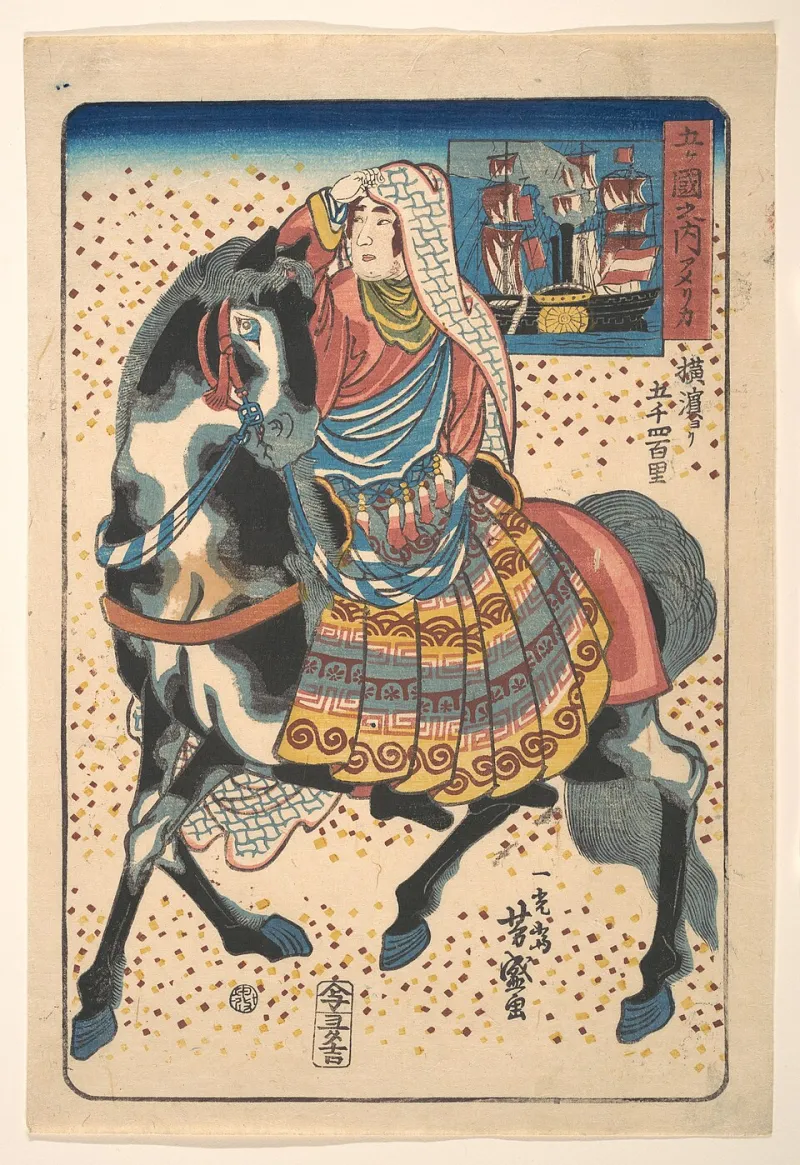
Photo: Utagawa Yoshimori, CC0, via Wikimedia Commons
There's a particular kind of pressure that grows up alongside second-generation kids in immigrant households. It's quiet but constant—the unspoken expectation that you will take everything your parents sacrificed and turn it into something respectable. A degree. A title. A salary that justifies the whole journey. For a long time, that script was followed dutifully. But something is shifting.
Across the country, a growing wave of Asian-American entrepreneurs is tearing up that old playbook and writing their own. They're not chasing corner offices or Fortune 500 rungs. They're building businesses that look like them, sound like them, and carry the weight of where they came from—without being crushed by it.
The Model Minority Myth Was Never a Business Plan
Let's be honest: the "model minority" label has always been a cage dressed up as a compliment. It flattened entire communities into a single, manageable story—hardworking, quiet, successful in the ways that make other people comfortable. For decades, it funneled ambitious Asian-Americans toward medicine, law, and engineering, industries where the rules were already written and the path was clear.
But clarity isn't the same as freedom. And a lot of the founders emerging right now are the ones who looked at that clearly lit path and decided to walk off it entirely.
Take the explosion of Asian-American-owned food businesses over the last five years. These aren't just restaurants—they're cultural statements. Chefs and food entrepreneurs are building brands around the specific, unapologetic flavors of their family kitchens: the fermented, the funky, the deeply spiced, the things that got packed away or toned down for mainstream palates. They're not asking for permission to be complex. They're betting that complexity is exactly what the market is hungry for.
Heritage as a Business Asset (Not a Liability)
One of the most interesting pivots happening in this entrepreneurial wave is the reclamation of cultural knowledge as genuine expertise. For a long time, the advice was to assimilate—to make yourself legible to the mainstream market by sanding down the edges that felt "too ethnic." That advice is being rejected loudly.
Across wellness, beauty, food, fashion, and tech, Asian-American founders are leaning into specificity. They're building supply chains that source directly from family networks in Vietnam, Korea, the Philippines, and India. They're naming their products in their heritage languages. They're telling origin stories that start in grandparents' villages, not in some sanitized "inspired by" mythology.
This isn't nostalgia for its own sake. It's strategic. In a market saturated with generic branding, authenticity is a differentiator. And no one can fake the kind of authenticity that comes from actually living a culture across generations.
Second and third-generation founders are uniquely positioned here. They hold two fluencies at once—they understand American consumer culture deeply, and they carry genuine, embodied knowledge of traditions that the mainstream market is increasingly curious about. That's not a gap to bridge. That's an advantage.
The Immigrant Legacy Problem (and Gift)
Of course, it's not all clean and triumphant. There's a complicated emotional terrain that comes with building something in the shadow of your parents' sacrifices.
Many Asian-American entrepreneurs describe a specific kind of guilt that sits with them when they choose a riskier, unconventional path. Their parents didn't cross oceans or work double shifts so their kid could start a small-batch hot sauce company or a community-focused design studio. At least, that's the fear. The reality is often more nuanced—immigrant parents who sacrificed for their children's futures frequently want those futures to hold joy, not just security.
But the negotiation is real. Some founders talk about structuring their businesses in ways that actively involve their families—bringing parents in as advisors, sourcing from family recipes, hiring siblings. It's a way of making the business feel like a continuation of the immigrant story rather than a departure from it. The hustle doesn't disappear; it just changes shape.
Others are more deliberate about the break. They love their families deeply and have made peace with the fact that their parents may never fully understand the path they've chosen. The respect runs both ways, even when the vision doesn't.
Community Over Competition
One thread that runs consistently through conversations with Asian-American founders is the emphasis on collective success over individual wins. This isn't just feel-good talk—it's showing up in how these entrepreneurs actually operate.
Collaborative pop-ups, shared storefronts, mentorship networks, community investment funds—these are becoming structural features of this entrepreneurial scene, not just nice-to-haves. Organizations like Gold House and various regional Asian-American business coalitions are formalizing what used to happen informally at family gatherings and community events: the sharing of knowledge, connections, and resources across cultural lines.
There's a philosophical underpinning here that connects to values many of these founders absorbed growing up. Concepts like the Vietnamese idea of tình làng nghĩa xóm (community solidarity) or the Korean concept of nunchi (reading the room and responding to collective needs) aren't just cultural footnotes. They're informing how businesses are being built and how founders are showing up for each other.
What Success Actually Looks Like
The most radical thing about this generation of Asian-American entrepreneurs might be their willingness to define success on their own terms—and to say that definition out loud.
Success might mean building a business that stays small by design, so it can remain rooted in a specific community. It might mean prioritizing sustainable profit over rapid scale. It might mean measuring impact by how many people from your neighborhood you employed, or how many young people you mentored, or how many times a customer told you that your product made them feel seen.
None of that shows up on a traditional success metric. But it's building something real—something that carries meaning beyond the bottom line.
At Cổ Kính Ánh Hồng, we've always believed that the most powerful stories are the ones that hold the old and the new at the same time. These founders are doing exactly that—carrying forward what their families built while refusing to be contained by anyone else's expectations of what comes next. That's not just a business story. That's a cultural story. And it's one that's just getting started.