Both and Neither: The Asian-American Artists Making Music That Refuses to Choose a Side
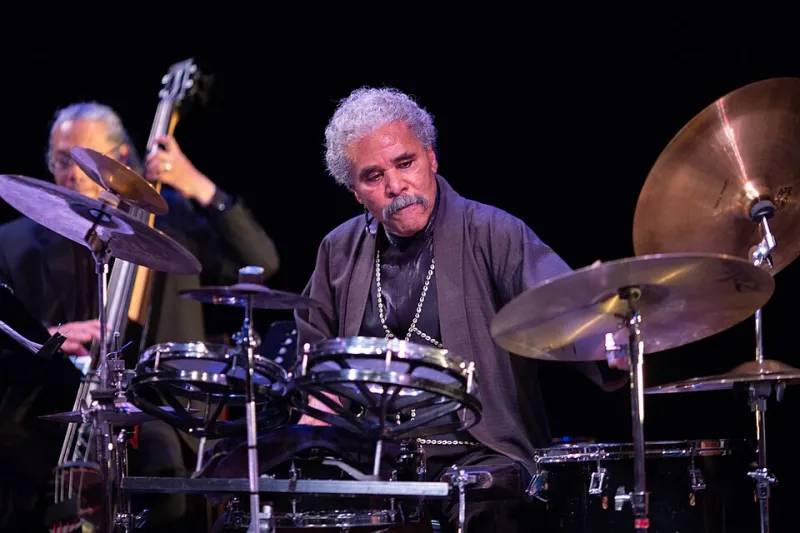
Photo: Hapabass, CC BY-SA 4.0, via Wikimedia Commons
The Music That Lives in the Hyphen
There's a moment in Rina Sawayama's "STFU!" where the song pivots — without warning — from a serene, almost ceremonial opening into a wall of nu-metal guitar. It's disorienting. It's also kind of perfect. Because that whiplash? That's the feeling.
That's the feeling of being asked where you're really from at a party. Of code-switching between languages at the dinner table and English at the office. Of loving two worlds that have never been fully introduced to each other.
A growing wave of Asian-American musicians has stopped trying to smooth out that tension and started building entire sonic architectures from it. They're layering erhu over electronic bass, threading Mandarin and Vietnamese into hip-hop flows, sampling Carnatic rhythms under indie guitar. Not as a branding exercise. Not as a novelty act. As a genuine creative and cultural reckoning.
Heritage as Instrument, Not Costume
The distinction matters enormously: there's a difference between an artist who drops a traditional instrument into a track for aesthetic effect and one who has spent years sitting with a grandmother who played it, absorbing its emotional vocabulary before ever touching a DAW.
Joyce Wrice, the Japanese-American R&B artist from San Diego, has spoken about how her identity informs not just her sound but her approach to the music itself — a kind of precision and intentionality that she traces back to Japanese cultural values around craft. It's not always audible in a single note, but it's structural. It shapes everything.
Then there's Yeek, the Filipino-American artist whose hazy bedroom pop carries an emotional register that fans have described as "warm and melancholy at the same time" — a combination that resonates deeply with diaspora listeners who know exactly what it feels like to be homesick for a place you've never fully lived in.
"There's this grief that doesn't have a clean name," says Marcus Dela Cruz, a Filipino-American producer based in Seattle who works with several emerging Asian-American artists. "And music is one of the few places where you can actually hold it."
The Instruments That Carry Memory
For some artists, the heritage element is literal and sonic. The pipa — a Chinese lute with a history stretching back over two thousand years — has been showing up in hip-hop and electronic production in ways that would have seemed unlikely a decade ago. The sitar, long flattened into a shorthand for "exotic" in Western pop, is being reclaimed by South Asian-American artists who grew up hearing it played correctly, who know its scales aren't a mood board.
LA-based producer and multi-instrumentalist Raveena Aurora has built an entire aesthetic universe around the intersection of Punjabi folk music, 70s soul, and dreamy psychedelia. Her album Lucid didn't just blend genres — it created a new emotional frequency, one that felt immediately legible to South Asian-American listeners who had never heard their own cultural textures reflected back through a contemporary lens.
"When I heard it for the first time I literally cried," says Ananya Krishnamurthy, a 26-year-old listener in Houston. "Not because it sounded like something my family listened to, but because it sounded like me. Like someone had finally made music for the version of me that exists."
That's the thing about this fusion work when it's done with real intention: it doesn't just create new sounds. It creates new mirrors.
Language as Lyrical Architecture
Beyond instruments, language itself has become one of the most potent tools in the Asian-American musical toolkit. Artists like Audrey Nuna, the Korean-American rapper and singer, move between English and Korean not to signal authenticity but because the emotional content of a lyric sometimes simply fits better in one language than the other.
This bilingual fluency in songwriting is a relatively recent development in mainstream visibility, even if it's been happening in underground and indie spaces for years. BTS blew the door open commercially, but the artists doing this work in the US context are operating in a different register — less pop spectacle, more intimate excavation.
"Korean has words for feelings that English doesn't have good translations for," Audrey Nuna has said in interviews. "Why would I give that up just to make it easier for people who've never had to live in two languages?"
That refusal to simplify — to file down the edges of a hybrid identity for easier consumption — runs through a lot of this work like a spine.
Redefining What 'American Music' Sounds Like
American music has always been fusion. Blues, jazz, rock and roll, hip-hop — every genre that defined American sound was built at a cultural crossroads, by people navigating their own complex identities and refusing to be contained by existing categories.
Asian-American artists are operating in that same tradition, even if the mainstream has been slow to recognize it as such. The instinct to categorize their work as "world music" or "Asian fusion" (a phrase that, as one artist put it, makes them feel like a restaurant menu) misses the point entirely. This is American music. It just happens to carry more of America's actual complexity than most of what gets played on mainstream radio.
Dela Cruz sees a generational shift underway. "The artists coming up now didn't grow up thinking they had to choose between their heritage and their Americanness," he says. "They grew up on the internet, where everything is available all the time. The idea that you have to pick a lane is just... old. It doesn't make sense to them."
A Throughline for the In-Between
For listeners, this music does something that goes beyond entertainment. It functions as a kind of cultural throughline — a way of feeling less alone in the particular experience of being neither fully here nor fully there, of loving two cultures that don't always know what to do with each other.
When a track opens with a guqin melody and drops into a trap beat, it's not a trick. It's a map. It's someone saying: I know this terrain. I've lived here too. Come listen.
And for a generation of Asian-Americans who grew up hiding one half of themselves to make the other half more legible, that kind of music isn't just good. It's necessary.