Calling Home in a Language You Almost Forgot: The Movement to Reclaim Heritage Tongues

Photo by Photo by Vitaly Gariev on Unsplash on Unsplash
Jennifer Nguyen remembers the exact moment she realized how much Vietnamese she had lost. She was sitting across from her grandmother at a pho shop in San Jose, trying to explain that she had just gotten promoted at work. The words simply weren't there. She stumbled, switched to English, watched her bà nội's face go politely blank. "That was the loneliest I've ever felt," Jennifer says, "sitting right next to the person I love most and having nothing to say."
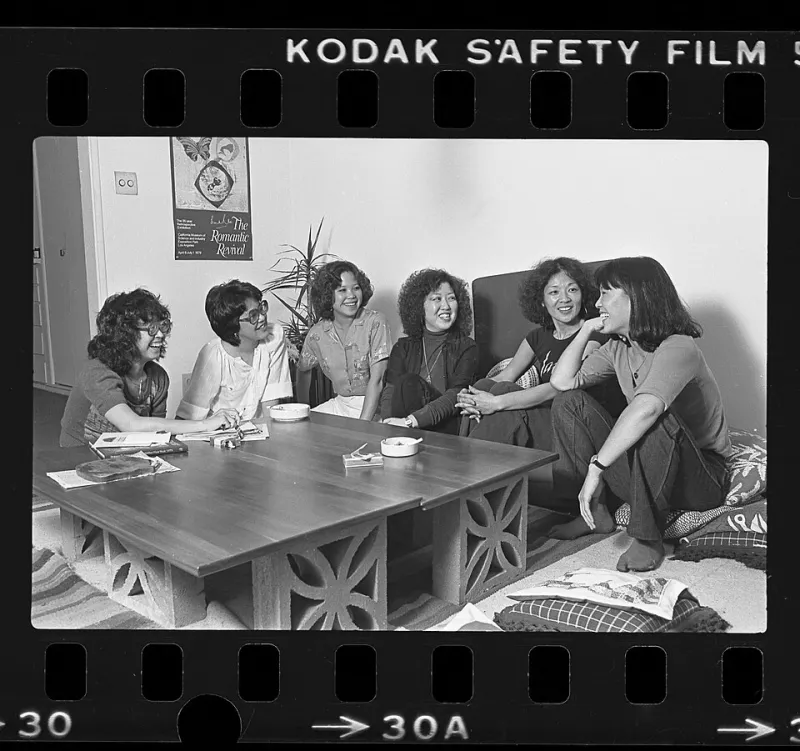
Jennifer is 29 now, and she's been taking Vietnamese classes at a community center in the East Bay for almost two years. She's not alone. Across the country, second- and third-generation Asian-Americans are showing up — to Zoom classes, language exchange meetups, community college courses, and family dinner tables with notebooks — determined to reclaim something they never fully had to begin with.
The Silence That Gets Passed Down
For a lot of diaspora families, the decision not to teach children the heritage language wasn't carelessness. It was survival strategy. Parents who arrived in the U.S. during the 70s, 80s, and 90s often made a calculated bet: English fluency meant opportunity. The mother tongue, they feared, would mark their kids as foreign, slow them down, hold them back.
So Tagalog stayed in the kitchen. Mandarin became the language of phone calls to relatives overseas. Khmer was something grandparents murmured at temple. And the kids grew up American — fluent, successful, and quietly cut off from entire rooms of their own family.
The psychological toll of that severance is something researchers are only beginning to fully document. Studies on heritage language loss point to what some linguists call "linguistic grief" — a sense of incompleteness that surfaces in adulthood, often during major life events like a grandparent's illness, a trip back to the home country, or the birth of a child. It's not just about communication. Language carries humor, tenderness, and cultural logic that simply doesn't translate. When you lose the words, you lose the texture.
A New Generation Picks Up the Pieces
What's remarkable about the current moment is how creative and community-driven the reclamation efforts have become. Apps like Duolingo have added Tagalog, Vietnamese, and Mandarin to their libraries, giving beginners an accessible on-ramp. But many heritage learners say the app experience only gets you so far — the grammar drills don't prepare you for the way your lola actually talks, or the tonal nuances that Duolingo's algorithm cheerfully ignores.
That's where community infrastructure comes in. Organizations like the Vietnamese Language and Culture School in Orange County, the Pilipino Cultural Center's language programs in the Bay Area, and Mandarin-immersion weekend schools in cities like Chicago and New York are seeing renewed interest from adult learners, not just children. Some programs have started offering evening classes specifically designed for heritage speakers — people who have passive understanding but limited active fluency — recognizing that their learning needs are completely different from a non-Asian beginner starting from zero.
Marcus Lim, a 34-year-old graphic designer in Brooklyn, grew up speaking Hokkien at home but lost most of it by middle school. He started attending a Taiwanese community language exchange two years ago after his father was diagnosed with early-stage dementia. "I realized I was running out of time," he says quietly. "Not just with my dad. With the whole language. There are maybe 50 million Hokkien speakers in the world, but how many of them are teaching it to their American-born kids? The math is not great."
When Family Becomes the Classroom
For many learners, the most powerful resource isn't an app or a classroom — it's a grandparent with time and patience. A growing practice in diaspora communities involves what some are calling "reverse mentorship" conversations: adult grandchildren sitting with elders and explicitly asking them to correct every mistake, to use only the heritage language, to treat the conversation as a lesson.
It requires a certain vulnerability. Being a functional adult who can't conjugate a basic verb in front of a 75-year-old is humbling in a way that classroom mistakes simply aren't. But many learners describe these sessions as transformative — not just linguistically, but relationally. Grandparents who spent decades feeling peripheral to their American grandchildren's lives suddenly become essential. The power dynamic shifts in a way that feels, for once, right.
Sophia Reyes, a nurse in Los Angeles whose family is from Cebu, has been recording her conversations with her lola as part of her Cebuano practice. "She thinks it's hilarious that I'm taking notes on how she talks," Sophia laughs. "But she also lights up. She'll go on for an hour about things she's never told me before, because now I can actually listen."
What's at Stake When the Words Go Quiet
Language preservation advocates are clear-eyed about the stakes. UNESCO estimates that roughly half of the world's 7,000 languages could disappear by the end of this century. Many of the languages most at risk are spoken by diaspora communities whose younger generations have assimilated into dominant-language cultures — which means communities like Filipino-Americans, Hmong-Americans, and Khmer-Americans are on the front lines of something much larger than personal identity.
But even setting aside the macro picture, individual families feel the loss acutely. There are jokes that don't cross the language barrier. There are stories that only exist in one tongue. There is a whole emotional register — the particular way Vietnamese expresses love through food-related language, the way Tagalog embeds family hierarchy into its pronouns — that simply evaporates when the language does.
The movement to reclaim these languages is, at its core, a refusal to let that evaporation go unchallenged. It's messy and imperfect and often involves a lot of laughing at your own mistakes. But for the people doing it, it feels like something close to coming home — even if home is a place you've never quite been before.
Jennifer is still working on her Vietnamese. Her grandmother has started leaving her voice messages — slow, deliberate, full of gentle corrections. Jennifer plays them back on her commute, mouthing the words along with the recording. "It's not perfect," she says. "But it's ours."