Behind the Lens: How Asian Diaspora Creators Are Finally Telling Their Own Stories
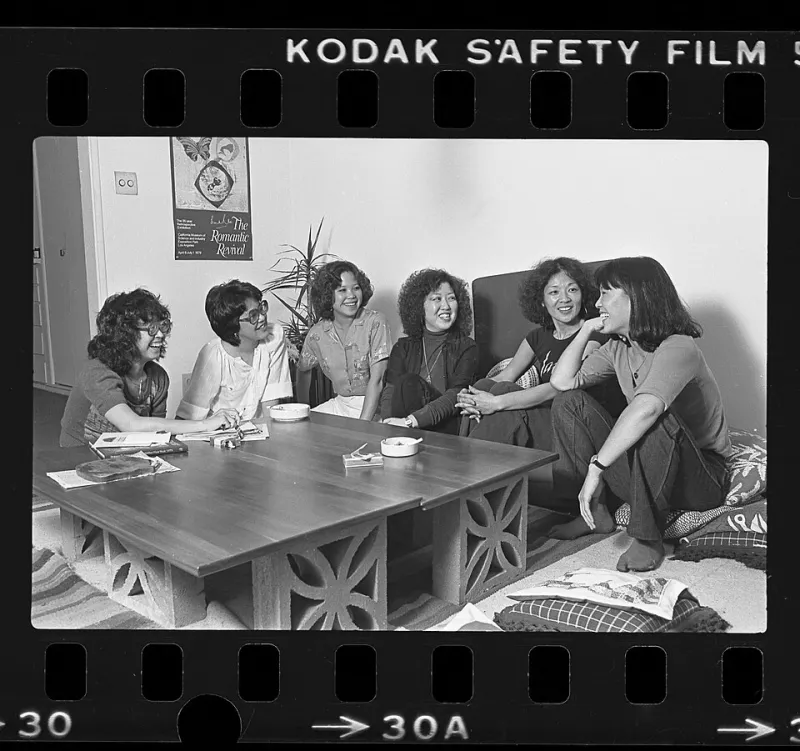
Photo: Gary Friedman, CC BY 4.0, via Wikimedia Commons
The Room Where It Happens — And Who's Been Left Out
For decades, if you wanted to see an Asian face on American screens, you learned to be grateful for scraps. The wise martial arts master. The overachieving student. The exotic love interest who never quite gets a full backstory. These weren't characters — they were placeholders, sketched in broad strokes by writers' rooms that had never once shared a meal with an actual Asian family.
But something has been quietly shifting. And lately, it's not so quiet anymore.
Across the country — from Brooklyn apartments to Los Angeles production offices to indie film festivals in Austin — a wave of Asian-American and Asian diaspora creators is moving decisively behind the camera. They're producing, directing, and writing their own work, and in doing so, they're refusing to let someone else narrate their lives.
Streaming Changed the Math
It's hard to overstate how much the rise of streaming platforms reshuffled the deck. When Netflix, Hulu, and Amazon Prime began aggressively competing for original content in the early 2010s, they created an opening that traditional broadcast TV simply hadn't offered. Suddenly, the question wasn't just who was on screen — it was who was getting a greenlight.
Shows like Fresh Off the Boat, Kim's Convenience, and the sleeper hit Pachinko didn't just attract audiences; they demonstrated that stories rooted in Asian and Asian-American experience could pull serious viewership numbers. For aspiring creators watching from the sidelines, these weren't just entertainment — they were proof of concept.
"When I saw Beef win at the Emmys, I literally cried," says Mina Thach, a Vietnamese-American director based in Los Angeles who is currently in post-production on her debut feature. "Not just because it was beautiful, but because it meant the conversation had changed. We weren't arguing anymore about whether these stories were 'universal enough.' They just were."
That shift in the cultural conversation has opened doors at the independent level too. Film grants, fellowships, and residencies specifically supporting AAPI creators have multiplied in the past five years. Organizations like Gold House and the Gotham Film & Media Institute have actively invested in this pipeline — recognizing that the problem was never a lack of talent, but a lack of access.
Authenticity Over Aesthetics
What makes this new wave of storytelling distinct isn't just representation in a checkbox sense. It's the texture. The specificity. The willingness to sit inside contradiction.
Take the growing number of diaspora films that refuse to romanticize the immigrant experience. Where Hollywood often reaches for an uplifting arc — the family that sacrifices everything and ultimately triumphs — many of these newer works are more comfortable with ambiguity. The parent who worked three jobs but still felt like a stranger to their own kids. The second-generation child who speaks their heritage language imperfectly and feels guilty about it. The grief of cultures that exist only in memory.
"I'm not interested in making a movie that makes non-Asian audiences feel good about Asian people," says Daniel Kwon, a Korean-American screenwriter whose short film Dobok screened at SXSW last spring. "I'm interested in making a movie that makes Asian audiences feel seen. Those are very different goals."
This distinction matters. Mainstream Hollywood has long operated on a logic of palatability — Asian stories were welcome when they could be packaged as inspiring, exotic, or safely comedic. The new generation of creators is pushing back against that framework, insisting that complexity is not a liability.
The Independent Circuit as Proving Ground
For many of these filmmakers, the festival circuit has become an essential launching pad. Tribeca, Sundance's NEXT program, and the Los Angeles Asian Pacific Film Festival serve not just as showcases but as community hubs — places where diaspora creators can find collaborators, mentors, and co-conspirators.
The community dimension is significant. Many emerging Asian-American filmmakers describe feeling isolated earlier in their careers, unsure whether their stories were "worth" telling. Finding a network of peers who were asking the same questions — and answering them boldly — has been transformative.
"There's this thing that happens when you're in a room full of people who get it without explanation," says Priya Menon, a Tamil-American producer who recently wrapped her first documentary about South Indian classical dance communities in the Bay Area. "You stop apologizing for the specificity of your story. You start seeing it as the point."
Where Do We Go From Here?
The momentum is real, but so are the remaining barriers. Development deals are still harder to secure. Marketing budgets for Asian-led projects remain smaller on average. And the pressure to make work that appeals across cultural lines — rather than fully inhabiting one — hasn't disappeared entirely.
But the direction of travel feels unmistakable. The stories being made now are more varied, more honest, and more willing to be difficult than anything that came before. They draw on the richness of Asian cultural heritage — its mythology, its music, its food, its intergenerational weight — without treating that heritage as mere backdrop or costume.
At Cổ Kính Ánh Hồng, we've always believed that the old and the new aren't in opposition. Ancient stories don't become less true when they're told through a modern lens. If anything, they get sharper. And that's exactly what's happening right now, one screenplay, one short film, one debut feature at a time.
The camera is turning. And the people holding it finally look like us.