Basement Ballads and Borrowed Mics: The Home Karaoke Comeback Nobody Saw Coming
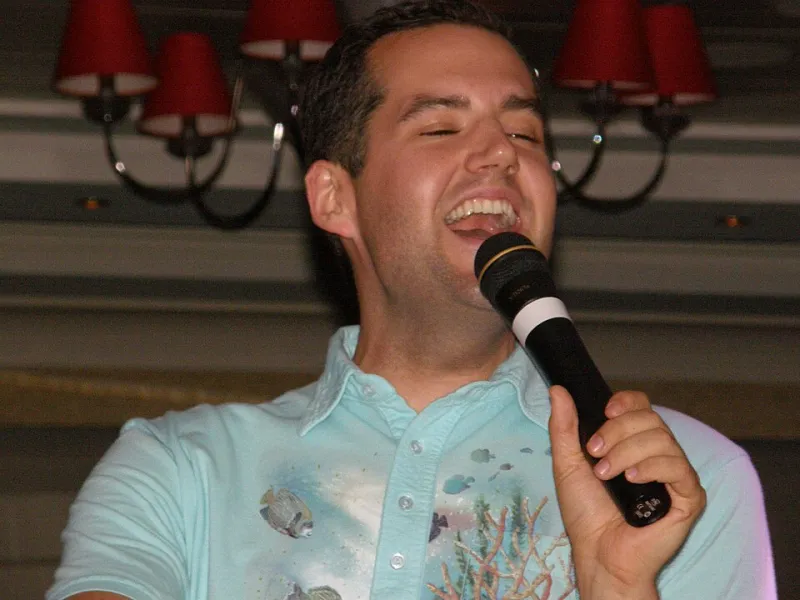
Photo: User:Treyhatfield, CC BY-SA 3.0, via Wikimedia Commons
Somewhere in Elmhurst, Queens, a 58-year-old father of three is currently butchering a Neil Diamond song while his 24-year-old daughter waits her turn to attempt a Trịnh Công Sơn ballad she learned entirely from her mother's humming. Nobody paid a cover charge. Nobody is judging the song selection. The spring rolls are homemade, the machine is older than the daughter, and by all accounts, the night is a roaring success.
Welcome to the home karaoke renaissance — the quiet migration of Asian-American party culture from velvet-rope lounges back to the basements where it started.
The Club Was Never the Point
For a stretch of the 2010s, the script was clear: you turned 21, you dressed up, you paid downtown prices to shout into a rented microphone in a room full of strangers. It was fine. It was a night out. But for a lot of Asian Americans, something always felt slightly off-key about it.
Karaoke didn't originate as a nightlife commodity. In Korean norebang rooms and Vietnamese family gatherings, it was always communal, slightly chaotic, and embarrassingly sincere. The point was never to sound good. The point was to sing the songs your parents played on Sunday mornings and watch your uncle perform like he was headlining a stadium in Saigon.
Gen Z and younger millennials are figuring out that you can't recreate that energy with bottle service. So they're going home. Literally.
When the Playlist Becomes a Family Tree
Here's where the home version beats any lounge in the city: the audience. When your mom is in the room, the song choices stop being about vibes and start being about lineage.
Kids who grew up half-hearing Vietnamese ballads are now hunting down lyrics on their phones, asking their parents to translate the chorus. Parents who spent decades keeping their heads down in America are picking up the mic to attempt English power ballads — sometimes phonetically, always fearlessly. The generational gap that makes dinner-table conversation hard simply dissolves when everyone is too busy laughing at the key change.
There's something quietly radical about a second-generation kid belting out a pre-1975 Vietnamese classic they can only half understand, and something equally radical about their mother confidently taking on Whitney Houston. Both are attempts at translation. Both land.
Building Your Own Setup (Without Breaking the Bank)
The best part of the basement karaoke revival? The barrier to entry is basically a floor. Here's what you actually need:
- The machine. Facebook Marketplace and eBay are treasure troves for used Magic Sing, Magic Mic, and older LaserDisc-era units. Vietnamese and Filipino families have been reselling these for decades — many still come loaded with thousands of songs.
- A smart TV workaround. No dedicated machine? YouTube karaoke channels plus a $30 wireless mic pair will get you 90% of the way there.
- Speakers that mean it. A decent Bluetooth speaker with a mic input changes everything. Echo and reverb are non-negotiable — they are the great equalizer of the tone-deaf.
- The snacks. This is a potluck. Chè, fruit, bánh, a Costco run for the less ambitious. Nobody remembers the sound quality. Everybody remembers the food.
- House rules. No skipping songs. Duets are mandatory when requested. Parents get one veto-free performance of their choosing.
Total startup cost: anywhere from $50 to $200. Compare that to one night out in Manhattan.
The Cross-Generational Starter Playlist
Need crowd-pleasers that work across the generational divide? Start here:
- "Nhật Ký Của Mẹ" — for the moment the room goes quiet and someone's mom gets emotional
- "Fly Me to the Moon" — the universal dad song
- Any BTS ballad — the kids know it, and honestly, so does mom by now
- "Bên Đồi Trên Bờ Sông" — a Vietnamese classic that turns the basement into a time machine
- "Sweet Caroline" — because the ba-ba-ba section requires zero English
- Seo Taiji and Boys deep cuts — for the parents who were cool in Seoul in the '90s
The Real Encore
The clubs will always be there. But there's a particular kind of magic in watching your father — a man who has maybe said "I love you" twice in your lifetime — pour his entire heart into a love ballad in a language you're still learning, while your cousins film it on their phones for the family group chat.
That's not a night out. That's a night home. And apparently, that's where everyone wants to be.