Who Owns the Culture? Inside the Messy, Loving Argument Every Asian-American Family Is Having
It started, as so many things do, over food.
My friend Linh — second-generation Vietnamese-American, grew up in San Jose — made bún bò Huế for her mom's birthday. She'd watched a dozen YouTube tutorials, sourced the lemongrass from a local Asian grocery, and even found mắm ruốc at a specialty shop forty minutes from her apartment. Her mom took one bite, smiled politely, and said, "It's good. But it's not really bún bò Huế."
Linh had spent two days on that soup.
The moment wasn't cruel — her mom wasn't trying to wound her. But it landed like a small verdict: you tried, but you don't quite belong to this thing you love. And Linh, who has spent most of her adult life trying to close the distance between herself and a country she's visited twice, felt it.
This is the argument happening at kitchen tables, holiday dinners, and group chats across Asian-American households right now. Not always out loud. Sometimes in silences, in raised eyebrows, in the gentle correction of a mispronounced word. The question underneath all of it: Who gets to say what's authentic?
The First Generation Holds the Receipts
For immigrants who came to the United States carrying their culture in their bodies — in their language, their recipes, their prayers, their memories — authenticity isn't an abstract concept. It's lived experience. It's the specific way your grandmother's hands moved when she folded dumplings. It's the dialect your village spoke that sounded nothing like the standardized version taught in schools. It's the religious ritual you observed not because it was written down somewhere but because everyone around you simply did it.
When first-generation parents see their American-born kids reaching for their heritage through cookbooks, TikTok videos, or heritage language apps, the reaction is often complicated. Pride, yes. But also something harder to name — a kind of protective skepticism. Because they know, viscerally, that there's a difference between learning about a culture and being shaped by it from birth.
"My parents didn't mean to gatekeep," says Daniel, a 28-year-old Korean-American from Atlanta whose family emigrated from Busan. "But whenever I tried to connect with Korean stuff — learning the language, getting into Korean history — there was always this undercurrent of 'you're doing it wrong.' Like my version wasn't valid because I learned it from the outside."
The tension is real, and it's not petty. First-generation immigrants often sacrificed enormous parts of their cultural identity just to survive in America. They code-switched, anglicized their names, swallowed their accents, and watched their traditions get flattened into stereotypes. The idea that their kids — who grew up with every advantage, who never had to fight for belonging in the same way — might casually claim a heritage they didn't suffer for can feel, at times, like a kind of erasure in reverse.
The Second Generation Builds Their Own Door
But here's what the second generation knows that their parents sometimes don't: being born in America doesn't make you American in the eyes of America. The identity crisis is real on both sides of the hyphen.
Growing up Asian in the US means spending years being told you're too something — too quiet, too foreign, too different. And then turning to your own family and being told you're not enough of something else. It's a particular kind of homelessness, belonging fully to neither world.
So second-gen kids build their own door. They study the history their parents never had time to teach them. They seek out community with other diaspora kids who understand the double bind. They create new rituals that blend what they inherited with what they've built. And sometimes — often, actually — that synthesis produces something genuinely beautiful.
Mia, a 32-year-old Filipina-American in Chicago, grew up in a household where Tagalog was discouraged because her parents wanted her to assimilate. Now she's enrolled in a heritage language program and volunteers with a Filipino cultural organization. "My lola cried when she heard me speak Tagalog on the phone," Mia says. "She said she never thought she'd hear it from me. That felt more real to me than any purity test."
Authenticity, for the second generation, is often less about preservation and more about reclamation. And reclamation is its own kind of valid.
The Third Generation Asks Different Questions
Then there are the grandkids — the third generation, growing up in a world where "Asian-American" is a cultural category with its own aesthetics, its own music, its own social media communities. For them, heritage can feel simultaneously more accessible and more remote than it did for their parents.
They might have a Korean last name and have never visited Korea. They might celebrate Lunar New Year as a vibe more than a spiritual practice. They might know more about the diaspora experience from podcasts and Instagram accounts than from their own families. Does that make their connection less real?
Not necessarily. But it does make the definition of authenticity even more contested. When a third-generation Chinese-American kid bonds with other Asian-Americans over shared pop culture references rather than shared ancestral practices, they're creating something new — a diaspora identity that's genuinely its own thing, not just a diluted version of something older.
And honestly? That's kind of always been how culture works.
The Fight Is the Point
Here's what gets lost when we frame these generational tensions as problems to be solved: the argument itself is a form of love.
When Linh's mom critiqued her bún bò Huế, she wasn't dismissing her daughter's effort. She was sharing something precious — a standard born from memory, from a place that no longer exists in quite the same form. And when Linh pushed back, insisting that her version was still valid, she was asserting her own right to belong to something that shaped her family long before she was born.
That's not a failure of communication. That's two people who care deeply about the same thing, coming at it from different angles.
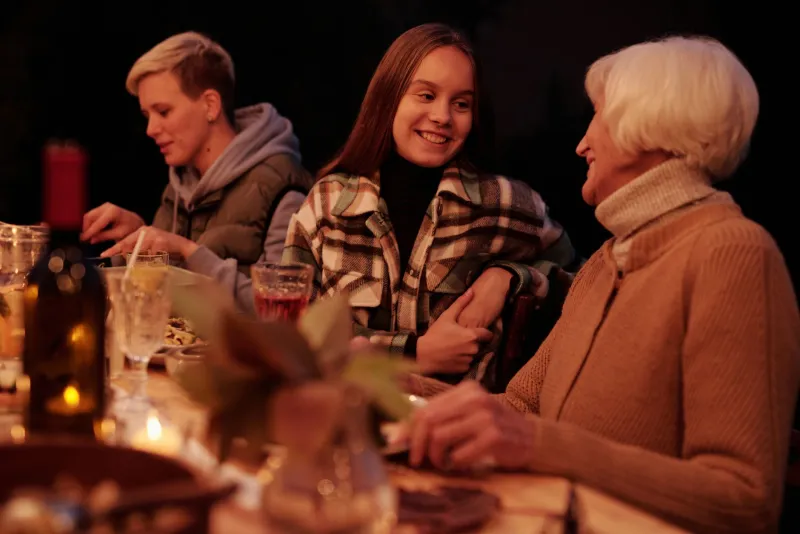
The families that seem to navigate this best aren't the ones who've resolved the tension — they're the ones who've learned to sit with it. Who can argue about what's "real" over a shared meal and still pass each other the fish sauce. Who can disagree about language or religion or dating choices without treating those disagreements as verdicts on each other's worth.
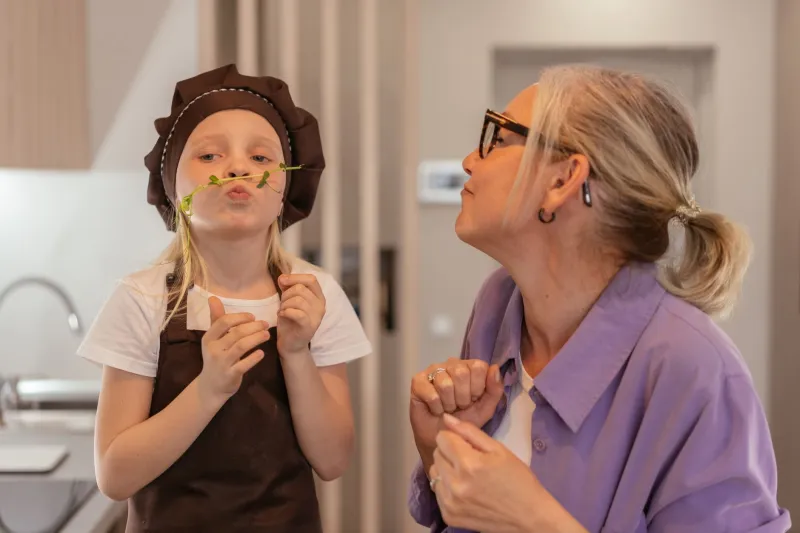
Culture has never been a static thing. Every generation that came before us adapted, borrowed, lost, and reinvented. The Vietnamese grandmother who insists on a specific soup recipe learned that recipe from someone who learned it from someone else, in a world that no longer exists. The Korean-American kid learning hangul from an app is participating in the same long chain of transmission — just with different tools.
Authenticity, maybe, isn't about perfect fidelity to an original. It's about the sincerity of the reaching. The fact that you care enough to try. The fact that you show up to the table — literally or figuratively — and say: this matters to me. I want to understand it. I want to carry it forward.
Even if the soup isn't quite right.
Even if your accent is a little off.
Even if your version looks different from your parents' version, and their version looked different from their parents' version before them.
That's not inauthenticity. That's inheritance doing what it's always done — changing shape to survive.