Bottled Childhood: The Perfumers Turning Grandmother's Kitchen Into a Signature Scent
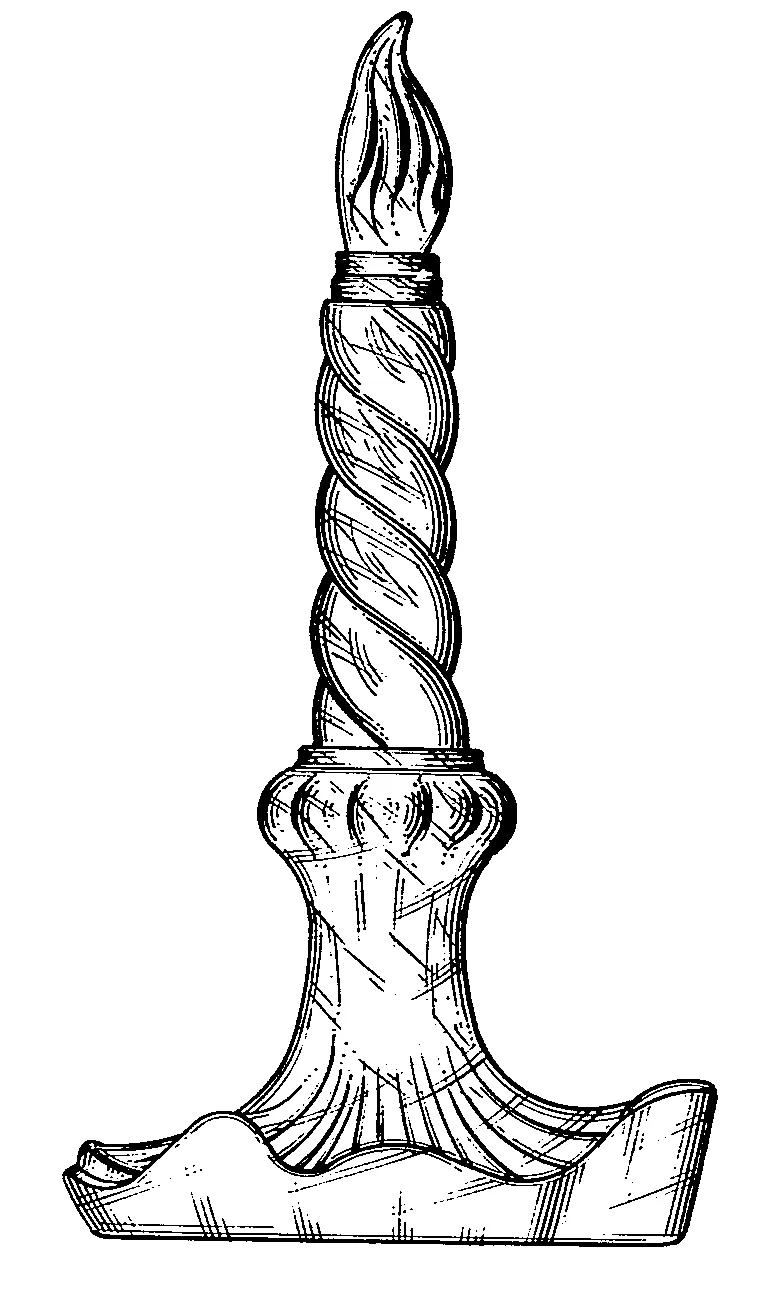
Photo: Unknown artist, patent drawing for a perfume bottle in the form of a candle in holder for 'Sleeping' fragrance. The original design by Marcel Vertes for Elsa Schiaparelli., Public domain, via Wikimedia Commons
Ask anyone in the Asian diaspora what home smells like and you won't get "ocean breeze" or "velvet plum" — the fictional fruits of mainstream perfumery. You'll get specific. Painfully specific. Fish sauce caramelizing in a hot wok. The medicinal sharpness of Tiger Balm on a grandmother's wrist. White jasmine strung over a doorway during Tết. Rice steam lifting off a fresh pot at 6 a.m.
A new generation of small-batch perfumers is betting that specificity is the future of fragrance — and their order books suggest they're right.
Why Your Perfume Should Smell Like Someone's House
For decades, the fragrance industry treated Asian scent memories as either nonexistent or novelty. You could buy "exotic oriental blend" mass-marketed nonsense, but you couldn't buy the actual smell of your childhood. The gap was glaring, and honestly, a little insulting.
Enter the indie makers: second-generation daughters and sons of immigrants who trained in the craft, then turned their noses homeward. Their premise is simple and quietly emotional — that the smells we grew up with are the most powerful scents on earth, and no one has ever bottled them properly.
The result is a wave of fragrances that read less like a Sephora shelf and more like a family album. One perfume smells like sticky rice wrapped in banana leaf. Another captures the dry, woody warmth of incense smoke in a temple courtyard. Another is — there's no subtler way to say this — the smell of a Vietnamese grandmother's medicine cabinet, and people are buying it on purpose. Wearing it on purpose. Crying about it, occasionally, on purpose.
Three Makers, Three Kitchens
The movement's most compelling voices share a pattern: a professional education in perfumery, followed by the realization that the scents they were trained to compose had nothing to do with the scents that raised them.
One Los Angeles-based maker builds entire collections around her mother's pantry — pandan leaf, toasted coconut, lemongrass bruised with the back of a knife. She describes her process as "cooking backwards": starting with the memory of a dish and reverse-engineering it into an accord that sits on skin for hours.
A New Yorker with Taiwanese roots works in temple notes — sandalwood, burnt sugar offerings, the cool mineral smell of stone courtyards. Her bestseller is named after her grandmother, and customers routinely write to tell her it made them call their families.
And a Vietnamese-American perfumer in Houston does the boldest work of all: capturing camphor, that sharp medicinal scent every Asian household seemed to keep in a small green tin. It should be a hard sell. Instead, it's her most requested scent — proof that nostalgia doesn't need to be pretty to be powerful.
The Science of Missing Home
There's real neuroscience underneath all of this. Scent is wired more directly to memory and emotion than any other sense, which is why one whiff of star anise can drop you into a kitchen you haven't stood in for twenty years. Diaspora consumers aren't buying perfume; they're buying a portal.
It's also a rejection of the idea that luxury fragrance has to smell like anything other than your own life. The mainstream industry spent a century telling Asian Americans what elegance smells like. These makers are answering with something better: elegance can smell like your mom's cooking, and that's not a downgrade. That's the whole point.
How to Find Your Scent of Home
If you're ready to trade in your department-store floral, a few tips from the makers themselves:
- Start with food notes you actually love, not ones that sound sophisticated. If you hate coconut, the coconut perfume is not for you, no matter how artisanal.
- Sample before committing. Indie brands almost always sell discovery sets, and skin chemistry is real.
- Ask your family what they remember. Building a scent memory interview into your shopping process is exactly the kind of beautiful overkill this community endorses.
- Wear it for yourself. The point isn't to smell good to strangers. The point is to smell like somewhere you belong.
Somewhere on a vanity in Orange County, there's a bottle of perfume that smells exactly like a grandmother's kitchen in Đà Lạt. The woman wearing it has never been there. It doesn't matter. She's home.