Grandma Wore It First: How Young Asian Americans Are Turning Inherited Wardrobes Into a Fashion Statement
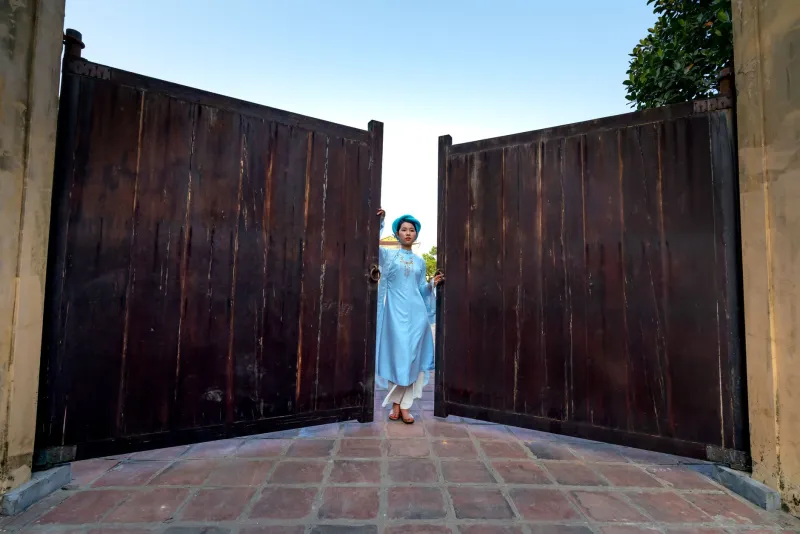
There's a photo making the rounds on TikTok that keeps stopping people mid-scroll. A young Vietnamese American woman stands in her grandmother's kitchen in Orange County, wearing a pale mint áo bà ba — a traditional Vietnamese peasant blouse — tucked loosely into wide-leg trousers. The caption reads: "Found this in Bà Nội's trunk. She said I could keep it. I said obviously." The comment section is a flood of heart emojis, personal stories, and one very relatable: "My grandma has better style than anyone I follow on here."
She's not wrong. And across the country, a quiet but unmistakable shift is happening in how young Asian Americans think about getting dressed.
The Closet at the End of the Hallway
For a lot of second-generation kids, grandma's closet was always slightly mysterious. Plastic-wrapped qipao. Embroidered house slippers in a shoebox. Linen sets in colors so muted they barely registered — until now, when those exact tones are showing up in every "quiet luxury" mood board on Pinterest.
What used to feel like relics are suddenly looking like reference points. The boxy silhouettes, the natural fibers, the way a garment was cut to move with the body rather than cling to it — these are design principles that high-end fashion houses are charging a premium to replicate. Meanwhile, Asian grandmothers have been living in them for decades.
Mia Chen, a 22-year-old fashion student in Los Angeles, started documenting her grandmother's wardrobe last year as a school project. It turned into something she didn't expect. "I thought I was doing an archive," she says. "But then I started actually wearing the pieces to class and people kept asking where I got them. I had to explain that they were, like, forty years old and belonged to my grandma."
The reaction she got wasn't surprise. It was envy.
Structure, Fabric, and the Long Game
There's a reason these clothes hold up — literally and aesthetically. A lot of traditional Asian garments were made with durability in mind, not disposability. Natural linens, hand-stitched details, structured collars that don't wilt after one wash. In an era where a $15 shirt loses its shape by the third wear, that kind of quality reads as radical.
The silhouettes matter too. Qipao-inspired pieces — fitted through the torso with those distinctive side slits and mandarin collars — have been quietly influencing Western fashion for years, but there's something different about wearing a version that actually came from your own family's history. The cut isn't a trend reference. It's a direct line.
Same goes for the oversized linen coordinates that many East and Southeast Asian grandmothers favored for everyday wear. Comfortable, breathable, effortlessly put-together. Gen Z didn't invent "elevated loungewear" — their grandmothers were just living it quietly, without the Instagram caption.
Not Just an Aesthetic — An Argument
This isn't only about looking good, though the looks are genuinely excellent. What's interesting is what happens when a 21-year-old shows up to a family dinner in something her grandmother used to wear to the market. It opens a door.
Suddenly, there are conversations that weren't happening before. Where did this fabric come from? Who made it? What was happening in your life when you wore this? Fashion becomes a kind of archaeology — a way to ask questions that might feel too heavy to ask directly but fit naturally into the context of "tell me about this piece."
For many young Asian Americans who grew up feeling the distance between their own cultural identity and their grandparents' lived experience, clothing is becoming an unexpected bridge. Not a costume, not appropriation of your own heritage — just a genuine inheritance, accepted and worn with intention.
Jasmine Park, a Korean American stylist based in New York, has started incorporating what she calls "heirloom dressing" into her client consultations. "There's something really powerful about wearing something that has a story that belongs to you," she explains. "It's not a trend in the way that trends come and go. It's more personal than that. It's about reclaiming something that was always yours to begin with."
Fast Fashion Can't Copy This
Here's the uncomfortable truth that sits underneath all of this: fast fashion brands are already trying to catch up. Mandarin collars are everywhere. Linen coordinates are a staple of every mid-range retailer's summer collection. The aesthetic has been noticed, packaged, and put on a rack at a store in every American mall.
But there's something they can't replicate, and Gen Z knows it. A mass-produced version of a qipao-inspired blouse doesn't carry the same weight as the one that's been folded in tissue paper since 1987. The texture of a garment that's been worn and washed and worn again has a quality that no factory can produce on purpose.
This is partly why the trend — if we can even call it that — feels more durable than most. It's not driven by a brand campaign or a celebrity moment. It's driven by young people opening boxes in their grandparents' homes and realizing that what's inside is worth keeping.
What "Timeless" Actually Means
Fashion has always had a complicated relationship with the word "timeless." It gets applied to little black dresses and white button-downs, to things that are safe and Western and easy to market. But spend five minutes looking at the construction of a well-made cheongsam or the elegant restraint of a traditional Vietnamese áo dài, and a different definition starts to take shape.
Timeless isn't about being invisible. It's about being made with enough care and intention that it outlasts the moment it was created in. By that definition, a lot of what's hanging in Asian grandmothers' closets across America qualifies — and their grandchildren are finally starting to see it.
The most exciting part isn't the fashion itself. It's what happens when a generation that grew up feeling caught between two worlds finds a way to wear both of them at once — literally. There's something quietly radical about a young Asian American walking into a room in her grandmother's clothes and feeling, maybe for the first time, completely at home in her own skin.
Bà Nội's trunk, it turns out, was full of more than fabric.