More Is More: How Asian-Americans Are Flooding Their Homes With Color and Calling It Coming Home
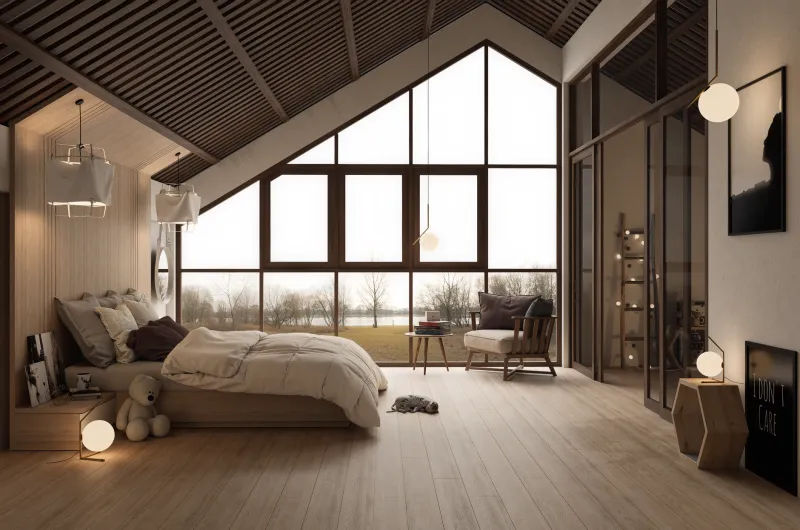
There's a particular kind of silence that lives inside a minimalist room. Clean lines. Neutral palette. One sculptural object on a shelf, chosen for its negative space as much as its presence. For years, that silence was sold to us as sophistication — the aesthetic endpoint of a life well-curated.
But for a lot of Asian-Americans, that silence sounds a whole lot like assimilation.
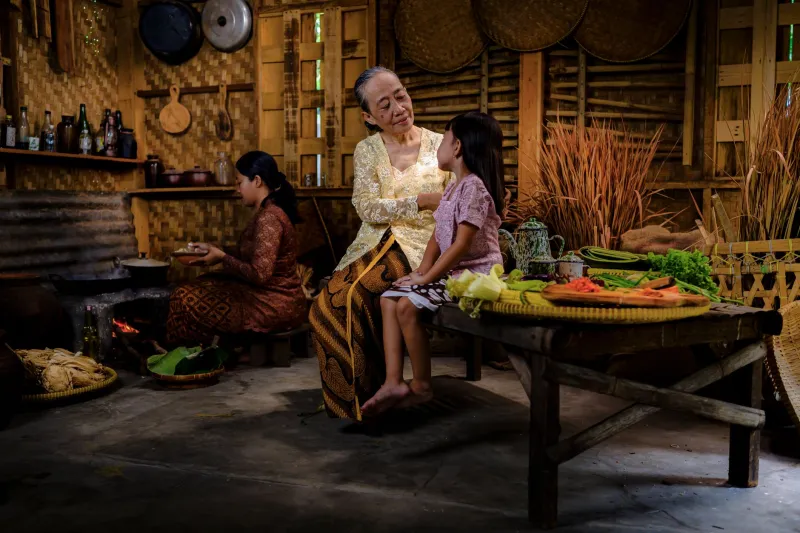
"My mom's living room back in Vietnam had lacquered furniture, embroidered cushions, a red altar with gold trim, fake flowers that somehow looked more alive than real ones," says Linh T., a 29-year-old graphic designer in Houston. "When I moved into my first apartment, I painted it greige and bought a linen couch because I thought that's what having good taste meant. It took me three years to realize I was decorating to impress white people who weren't even there."
She's not alone. Across the country, second and third-generation Asian-Americans are quietly — and sometimes loudly — staging a rebellion inside their own four walls. The weapon of choice? Color. Pattern. Abundance. The layered, sensory-rich visual language of the homes they grew up in, or the homes their parents described with homesick eyes.
The Minimalism Myth
Let's be honest about where the minimalism trend came from and who it was built for. The Scandinavian-influenced, Instagram-perfected aesthetic that dominated the 2010s was always more cultural export than universal truth. It was aspirational in a very specific, very Western way — and it arrived in mainstream American design culture at exactly the moment social media was teaching everyone to perform their lives for an audience.
For many Asian-Americans navigating visibility and belonging, the appeal made a certain painful sense. A neutral home is an unreadable home. It doesn't give anyone anything to comment on, question, or exoticize. It doesn't invite the "oh, is that feng shui?" comments or the raised eyebrows at the shrine in the corner.
But there's a cost to that kind of invisibility, and more people are deciding it's too high.
"Minimalism always felt like it was asking me to subtract myself," says Marcus L., a Korean-American architect based in Los Angeles. "I grew up in a house where every surface had meaning — ceramics my grandmother brought over, calendars from the Korean grocery store, a specific shade of green on the walls that my parents just liked. That wasn't clutter. That was evidence of a life."
What Maximalism Actually Means Here
The maximalism that Asian-Americans are embracing isn't the same as the Western bohemian-chic version — all macramé and collected vintage and deliberate eclecticism. It's something more personal and more rooted.
It might look like a living room anchored by a deep persimmon accent wall, hung with a mix of traditional silk panels and contemporary prints by Asian-American artists. It might be a kitchen where red lacquer stools sit beside open shelves crowded with mismatched ceramics, each one carrying a story. It might be a bedroom where a hand-embroidered duvet from a grandmother's closet gets layered over modern bedding without apology.
The throughline isn't "more stuff." It's intentional richness — the understanding that visual abundance is its own form of intelligence, one that Asian design traditions have practiced for centuries.
"In Chinese aesthetics, a room that's too empty is considered unlucky, even unwelcoming," notes interior stylist Mei C., who runs a design studio in the San Francisco Bay Area that focuses on Asian-American clients. "There's a whole philosophy around the idea that a home should feel generous — to the people who live there and to the guests who visit. That's not excess. That's hospitality expressed through space."
The Ancestral Palette
Color, specifically, has become a site of reclamation. The warm, saturated hues that show up in traditional Asian textiles, ceramics, architecture, and art — saffron and vermillion, jade and indigo, the particular golden yellow of marigolds at a Diwali celebration or a Lunar New Year altar — carry cultural memory in a way that Agreeable Gray simply does not.
Choosing those colors for your walls or your furniture isn't just an aesthetic decision. It's an act of continuity.
"I painted my bedroom the exact shade of red that was on the temple near my grandparents' house in Fujian," says Stephanie W., a 34-year-old teacher in Chicago. "I matched it from a photo. It took four tries to get it right. And when I finally got it — I cried. It sounds dramatic, but it felt like I'd brought something back that I didn't know I'd lost."
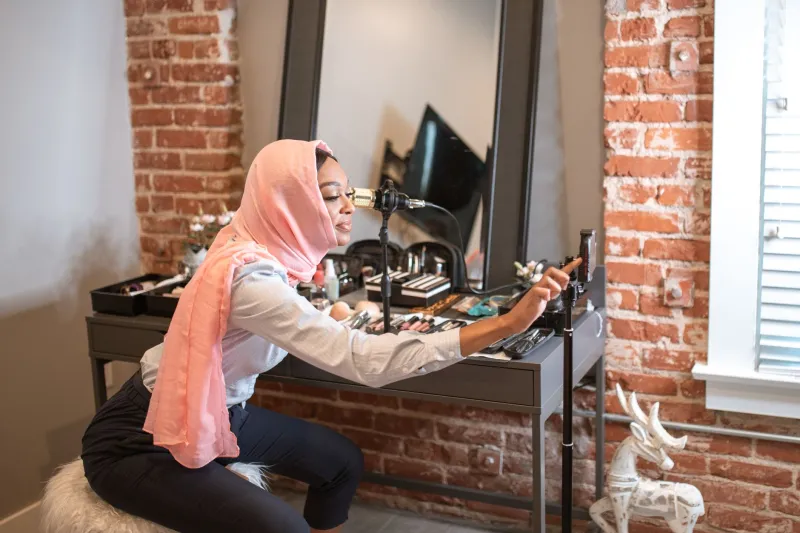
That kind of emotional resonance is showing up everywhere right now, from TikTok home tours where Asian-American creators explicitly narrate the cultural meaning behind their design choices, to Pinterest boards titled things like "ancestral maximalism" and "heritage home."
Pushing Back on the "Exotic" Trap
It's worth naming a tension here, because it's real: there's a difference between Asian-Americans designing their homes in dialogue with their own heritage and the Western design industry packaging "Asian-inspired" aesthetics as trend content.
The latter has a long, uncomfortable history. Chinoiserie. "Oriental" motifs on mass-produced throw pillows. The selective borrowing of bamboo and cherry blossoms divorced from any actual cultural context. That version of Asian aesthetics in Western interiors has always been about consuming a flattened image of a culture, not engaging with its depth.
What's happening now in Asian-American homes is categorically different. It's specific, personal, and self-authored. It's Linh buying furniture that reminds her of her mother's house, not a Pottery Barn "inspired by the East" collection. It's Marcus hanging work by Korean artists he actually knows, not a generic print of a pagoda.
"There's a version of this that's trend, and there's a version that's truth," says Mei. "I can usually tell within five minutes of talking to a client which one I'm working with. The truth version — that's where the real design happens."
Home as a Full-Body Statement
Maybe what's most powerful about this shift is what it says about belonging. For so long, the pressure on Asian-Americans — especially those raised in predominantly white communities — was to make yourself smaller, quieter, more legible to the mainstream. That pressure showed up in how people dressed, how they talked, what they ate at school, and yes, how they decorated.
Choosing a maximalist, color-saturated, culturally layered home is a refusal of that pressure. It's saying: this space is mine, and it will look like where I come from, not where I was told to aspire to.
It's also, in the best possible way, an invitation. Homes that wear their heritage openly tend to spark conversations — about family histories, about craft traditions, about what beauty actually means across different cultural contexts. They make space for stories that minimalism, by design, leaves no room for.
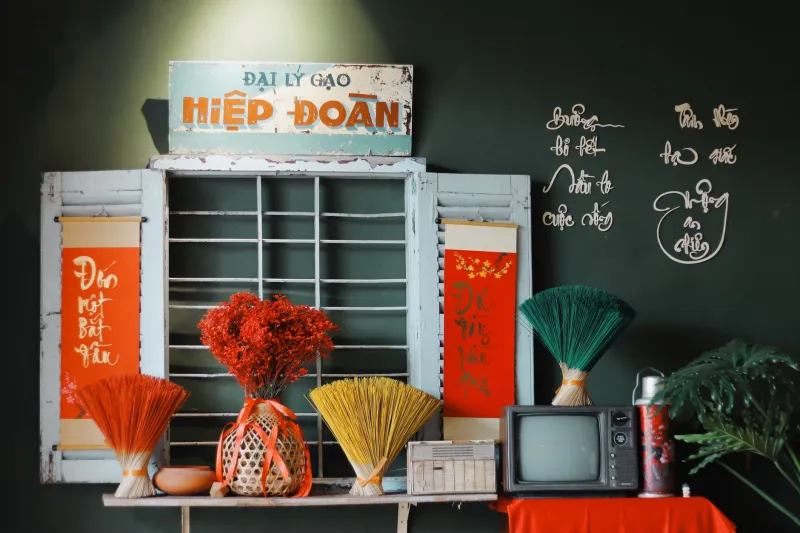
Linh repainted her Houston apartment last year. The living room is now a deep terracotta. There are silk lanterns from a Tết market, a vintage poster from a Vietnamese film, and yes, a shelf crowded with things her mother would recognize.
"It finally feels like mine," she says. "Like, actually mine. Not mine performing someone else's idea of taste."
That's the thing about color. It doesn't just decorate a room. Sometimes, it brings you back to yourself.