Warm Walls, Softer Worlds: How Asian-American Creators Are Designing Spaces That Actually Feel Like Home
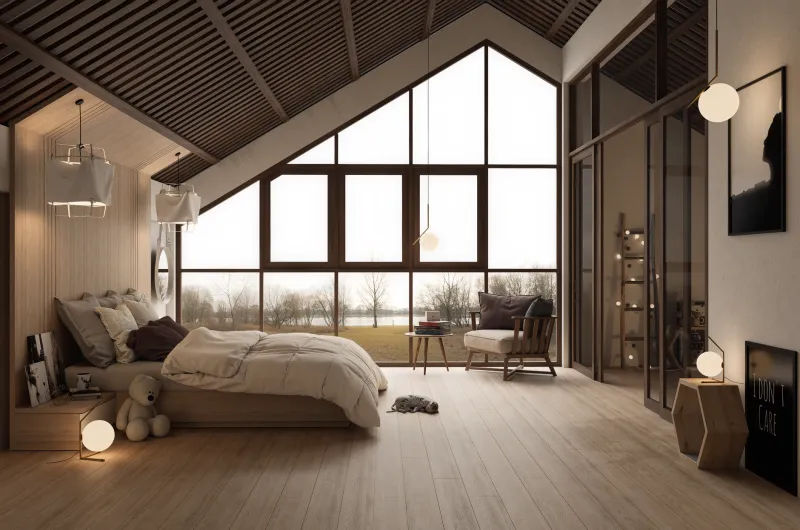
There's a particular quality of light that shows up again and again in the most-saved corners of Asian-American-owned cafes, curated bedroom shelves, and meticulously composed Instagram grids. It's not quite golden hour. It's warmer than that — a blush-tinted, lantern-soft glow that makes everything it touches feel like a memory you haven't made yet. Call it the pink light effect. Call it sanctuary design. Whatever you name it, it's everywhere, and it is deeply, intentionally felt.
The question worth asking is: where does this come from, and what is it actually doing for the people creating it?
More Than a Mood Board
For Linh Tran, the answer started with her grandmother's house in San Jose. "There was this lamp she kept in the corner of her living room — this old ceramic base with a paper shade that had gone a little orange from years of use," says the 28-year-old interior stylist, who now runs a small design consultancy focused on residential spaces for Asian-American clients. "The whole room had this warmth to it. It wasn't trendy. It was just hers. When I started designing my own apartment, I kept chasing that feeling without even realizing it."
What Linh ended up with was a studio in Oakland layered in terracotta, soft blush, and warm-toned wood — lit almost entirely by lamps rather than overhead lighting. She posted a tour on TikTok almost as an afterthought. It got over 400,000 views.
The comments were full of people saying some version of the same thing: this feels like home.
That response points to something deeper than aesthetics. For many Asian Americans — particularly those who grew up navigating the dissonance between a home culture and a school culture, between a parent's world and an American one — the physical environment has always carried emotional weight. The design choices weren't just about what looked nice. They were about what felt safe.
The Business of Belonging
It's not just happening in private homes. Walk into a new wave of Asian-American-owned small businesses across cities like Los Angeles, Houston, New York, and Chicago, and you'll notice a deliberate aesthetic language emerging — one that borrows from traditional East and Southeast Asian visual culture (think paper lanterns, lacquered surfaces, ink wash art) but translates it into something that reads as both contemporary and deeply personal.
Mei-Ling Cho opened her Taiwanese-inspired dessert cafe in the Silver Lake neighborhood of LA two years ago. The interior is a study in contrasts: raw concrete floors, bamboo accents, and walls painted a color she custom-mixed herself — a dusty, muted rose she calls "old temple at dusk." The lighting is entirely warm-spectrum. There are no cold whites anywhere.
"I wanted people to walk in and exhale," she says simply. "Especially Asian women. I wanted them to feel like they didn't have to explain themselves here."
That last part is key. Sanctuary design, in this context, isn't just about beauty — it's about belonging. It's about creating a space where the cultural references don't need a footnote, where the aesthetic choices aren't in conversation with a white gaze. The pink light isn't performing for anyone. It just is.
Gen Z Brings It Online
If older millennials like Linh and Mei-Ling are expressing this through physical spaces, Gen Z Asian-American creators are doing it across their digital ones too. The curated "study with me" videos, the bedroom shelf arrangements, the carefully lit selfies — there's a cohesive visual grammar emerging that pulls from similar emotional roots.
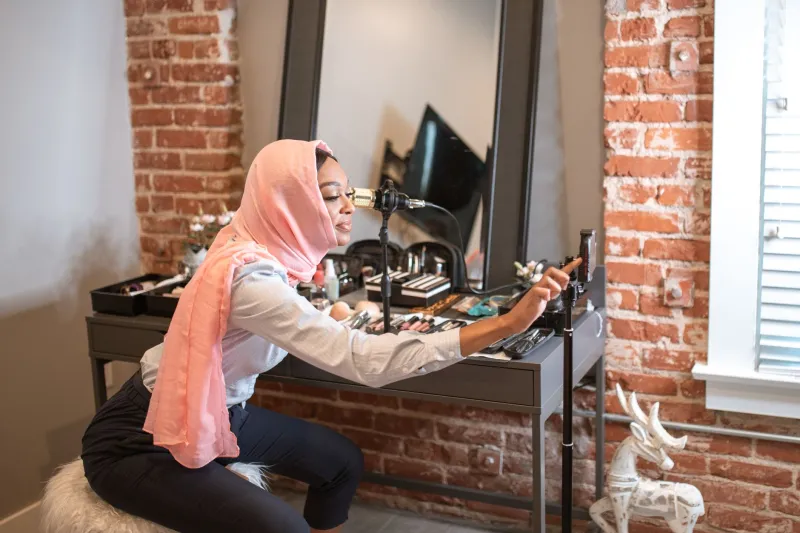
Jasmine Park, a 21-year-old Korean-American creator based in Seattle, has built a following of nearly 80,000 on TikTok through what she calls "cozy heritage content" — videos of her room, lit by a ring of warm-pink Edison bulbs, as she studies, reads, or makes tea. Her shelf holds a mix of K-beauty products, her halmeoni's old ceramic tea cups, and a small framed print of a Korean ink painting she found at a thrift store.
"I think about it as like — I'm building a space that my past self would have needed," she says. "Growing up, I never saw spaces that felt both Asian and like, mine. Everything was either super traditional in a way that felt like a museum, or it was just generic American. I wanted something in between."
That in-between space — warm but not kitschy, rooted but not rigid — is exactly where this aesthetic lives. And for many creators, the pink light is part of what holds it together. It softens. It rounds edges. It makes the old and the new feel like they can coexist.
Is This Wellness Culture in Disguise?
It's worth asking the harder question: is some of this just millennial and Gen Z wellness culture doing what it always does — aestheticizing emotional needs into purchasable, postable content?
The honest answer is probably yes, and. Yes, there's a market here. Yes, brands have noticed. Warm-toned lighting, blush ceramics, and "zen corner" home decor are all booming product categories, and plenty of that commercial energy is being directed at Asian-American consumers and creators.
But the origin of the impulse — the genuine need to build a space that reflects a whole, unhyphenated self — predates the trend cycle. Linh points out that her grandmother wasn't making an aesthetic statement with that lamp. She was just making her home feel like her home.
"The trend caught up to something that was always there," Linh says. "We just finally have the platforms and the permission to show it."
Designing the Exhale
What ties all of these spaces together — the cafe in Silver Lake, the Oakland studio, the Seattle bedroom — isn't a specific color palette or a Pinterest board. It's intention. The people creating them are asking, often for the first time, what a space designed for them would actually feel like. Not for a client. Not for a trend. For themselves.
And over and over, the answer comes back warm. Rosy. Soft around the edges. Like a lamp in a grandmother's corner that nobody thought to photograph but everybody remembers.
There's something quietly radical about that. In a culture that has long asked Asian Americans to shrink, to assimilate, to make themselves legible to spaces that weren't designed with them in mind — building a room that glows on your own terms is a small but real act of self-definition.
The pink light isn't just pretty. For a lot of people, it's the first light that ever really saw them.