Paying a Fortune for a Childhood: Inside the Wild Market for Rare Asian Snacks and Vintage Finds
Somewhere in a temperature-controlled storage unit in suburban New Jersey, there are three sealed boxes of discontinued Meiji chocolate marble sticks sitting next to a mint-condition Tamagotchi still in its original Taiwanese packaging. The owner — a 38-year-old Vietnamese-American graphic designer named Thanh — paid just under $400 for all of it combined. She does not regret a single dollar.
"People think it's unhinged," she laughs. "But they didn't grow up being the only kid at lunch with a snack nobody recognized."
That particular experience — the quiet sting of pulling out something from home and watching your classmates make a face — is one that resonates across a generation of Asian-Americans who came of age in the '90s and early 2000s. And right now, that shared memory is quietly powering a resale economy that's part nostalgia trip, part cultural reclamation project, and part full-on collector's obsession.
The Market Nobody Saw Coming
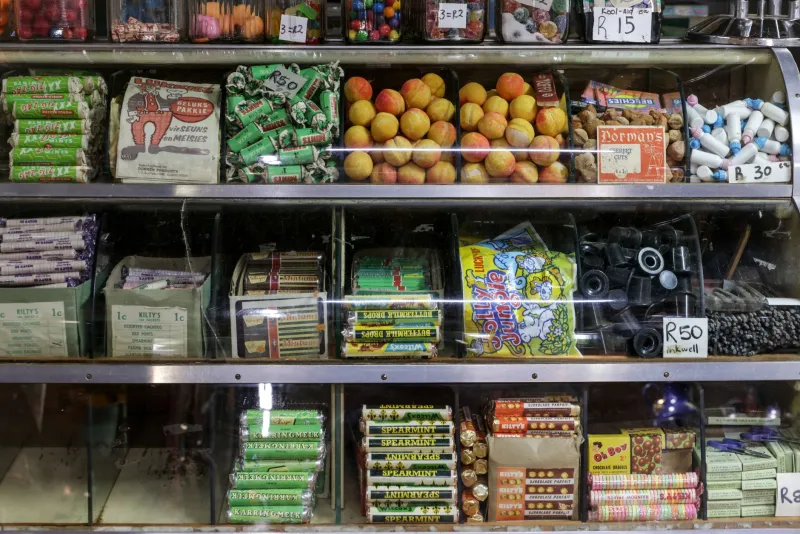
If you haven't been paying attention to certain corners of Facebook Marketplace, eBay, or the increasingly active subreddits dedicated to Asian snack preservation, you might be surprised by what things are going for. Discontinued flavors of Pocky that were only sold in Asian grocery chains during a brief window in the mid-2000s. Original-run Hello Kitty merchandise from Sanrio's early US retail push. Sealed bags of Want Want rice crackers in packaging that hasn't existed for fifteen years. These aren't just curiosities — they're commanding real money from real buyers.
Some of the demand is driven by pure collector logic: scarcity plus condition plus provenance equals value. But the Asian-American resale scene has its own emotional layer that's harder to quantify. These aren't baseball cards or vintage sneakers. They're objects tied to a very specific kind of childhood — one lived between two worlds, where the snacks your mom packed were the most tangible proof that your family's culture was real and worth keeping.
"When I find something that was in my parents' pantry growing up, it's not just a snack," says Marcus, a 42-year-old Korean-American in Los Angeles who collects vintage Korean confectionery packaging. "It's like finding a photograph I didn't know existed."
Social Media Turned Personal Obsession Into Community
What really supercharged this market was the internet doing what it does best: connecting people who thought they were alone in something weird they loved.
Facebook groups dedicated to "Asian snacks of our childhood" have pulled in tens of thousands of members. TikTok accounts devoted to unboxing vintage Asian grocery finds rack up millions of views. Instagram pages curating retro Asian product packaging have become genuinely influential. The algorithm, for once, did something useful — it showed a scattered diaspora community that their private memories were actually collective ones.
When someone posts a photo of a discontinued Shrimp Chips bag from a regional brand that only distributed on the East Coast in the '90s, the comment sections explode. People tag siblings. They share the exact memory of eating that specific snack at a specific relative's house. They ask, desperately, where they can find one. And then someone, inevitably, says they have one. And the DMs begin.
This is how prices get set in the nostalgia economy: not by formal auction, but by the intensity of feeling in a comment thread.
Why These Objects Carry So Much Weight
It would be easy to frame this as straightforward nostalgia — the same impulse that makes a middle-aged white guy pay $300 for a G.I. Joe still in the box. But cultural psychologists who study diaspora identity argue that what's happening in Asian-American collecting communities is something more loaded.
For many children of immigrants, the objects from their parents' culture occupied a strange, vulnerable space. They were treasured at home and potentially embarrassing outside of it. They were proof of belonging to something rich and specific — and also, sometimes, a reason to feel othered. Growing up, a lot of kids learned to keep those two worlds separate.
Adulthood, and the cultural confidence that's slowly been building in Asian-American communities over the past decade, has made it possible to stop compartmentalizing. Reclaiming those objects — paying good money for them, displaying them proudly, posting about them publicly — is a way of retroactively honoring the part of yourself you were sometimes pressured to minimize.
"I think a lot of us are healing something," says Jenny, a Taiwanese-American therapist in Chicago who has written about diaspora identity online. "When you spend $150 on a discontinued Taiwanese candy brand, you're not just buying candy. You're telling your childhood self that it was okay to love the things you loved."
The Preservation Argument
There's also a more pragmatic dimension to what collectors are doing: they're preserving cultural artifacts that would otherwise disappear entirely.
Many of the snacks and products being sought out weren't just discontinued — they were made by small regional manufacturers in Taiwan, Korea, Vietnam, or Hong Kong that no longer exist. The recipes are gone. The packaging is gone. In some cases, the companies themselves have been absorbed or shuttered. What remains are the objects themselves, scattered across attics and storage units and the back shelves of aging Asian grocery stores.
When a collector documents, photographs, and preserves these items, they're doing something that looks a lot like archival work. Some community members have begun donating pieces to university Asian-American studies programs or cultural heritage organizations. Others are digitizing packaging designs and sharing them in online archives. The line between collector and cultural historian is blurring in interesting ways.
The Price of Memory
None of this comes cheap, and that raises real questions about access. The nostalgia economy, like most economies, tends to reward those who can afford to participate. A sealed box of vintage Moon Cake tins from a celebrated Hong Kong bakery chain that closed its US locations a decade ago might cost more than some people's grocery budget for a month.
There's an uncomfortable irony in the fact that objects once associated with immigrant frugality — the affordable snacks, the practical household goods, the simple pleasures that didn't cost much — have been transformed into luxury collectibles by the market forces of scarcity and sentiment. Some community members push back on this, arguing that the commercialization of diaspora memory is its own kind of loss.
But for most of the collectors we spoke to, the spending feels less like luxury and more like necessity. Less like buying a thing and more like buying back a feeling.
Thanh, back in New Jersey with her sealed boxes of Meiji sticks, puts it simply: "I'm not going to eat them. I'm not going to sell them. I just want to know they exist. I want to know that part of my life was real."
In a culture that spent decades telling Asian-Americans to assimilate and move on, paying to hold onto the past doesn't seem unhinged at all. It sounds like a pretty reasonable response to being asked to forget.